
Contact Us
Top Dental Prosthetic Manufacturers in China for Global Buyers
For global buyers, choosing among China’s dental laboratories and manufacturers is not just a price comparison. The details matter: a crown’s marginal fit, a denture’s bite, the shade under clinic lighting, and whether production records follow each case. Reliable Dental prosthetic solutions depend on clear specifications, consistent quality checks, and communication that continues after an order ships. A polished catalogue is useful. It is not proof.
Prosthodontist and dental educator Dr. Gordon J. Christensen has long emphasized practical clinical outcomes. In paraphrase, his guidance is: “A restoration must function reliably, not merely look convincing on a model.” Buyers should assess material documentation, production capabilities, remake procedures, lead times, and the manufacturer’s experience with the required appliance types. Ask how cases are checked before dispatch. Ask what happens when a fit needs correction. Small questions reveal a lot.
This guide examines leading Chinese manufacturers through those buyer-focused criteria, while recognizing that capabilities vary by product and facility. A supplier may excel at crowns yet offer less evidence of strength in removable prosthetics. Rankings can simplify a complex market, perhaps too much. Treat them as a starting point, then request current documentation and evaluate samples against your own clinical requirements. No single supplier fits every practice. The careful choice is rarely the flashiest one.
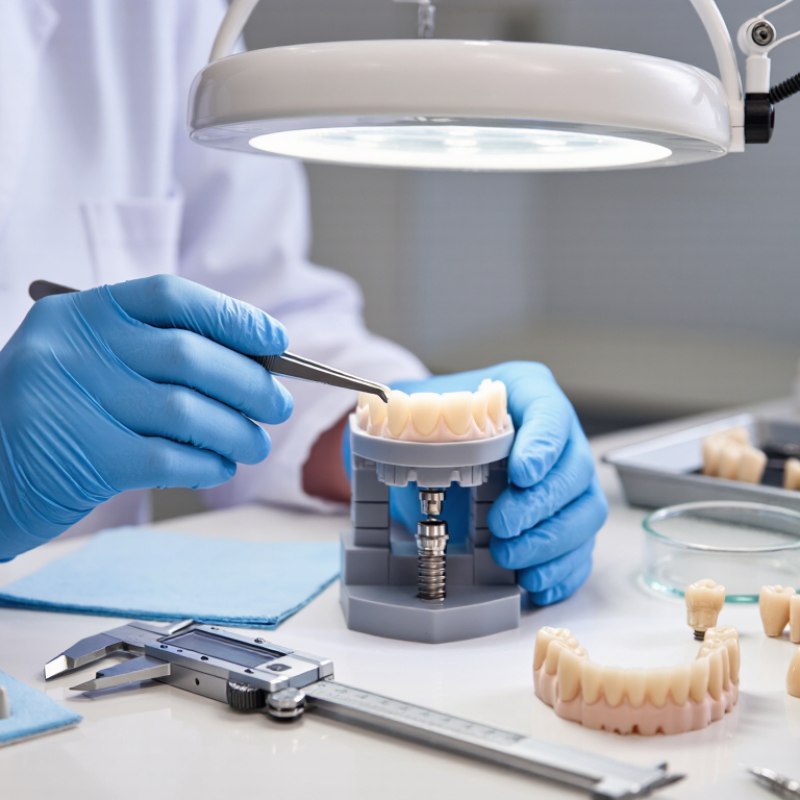
China’s Dental Prosthetics Industry: Scope and Development
China’s dental prosthetics industry serves a broad range of clinical needs, from single crowns and bridges to removable dentures and implant-supported restorations. The World Health Organization’s Global Oral Health Status Report 2022 estimates that oral diseases affect nearly 3.5 billion people worldwide. This figure signals substantial treatment needs, but it does not directly measure demand for prosthetics. Tooth loss, clinical choices, affordability, and access to care all shape actual orders.
China’s aging population is an important domestic factor. The National Bureau of Statistics reported that 296.97 million people in China were aged 60 or above in 2023, representing 21.1% of the population. For laboratories, this demographic shift can mean more varied cases: carefully matched denture teeth, precise crown margins, and repairs that fit existing restorations. Digital scanning and computer-aided design are also changing workflows, though equipment does not guarantee consistent fit. Skilled technicians still matter. One limitation is that public reports rarely isolate China’s prosthetics output from the wider dental-device sector, so headline market estimates deserve caution. A factory’s capacity is not the same as verified clinical performance.
Main Types of Dental Prosthetics Made in China
Dental prosthetics made in China generally fall into three groups: fixed restorations, removable dentures, and implant-supported restorations. Fixed options include crowns and bridges made from zirconia, other ceramics, or metal-ceramic materials. They suit different bite forces and aesthetic needs. A thin ceramic crown can look natural, but shade matching still depends on good clinical records.
Removable products include acrylic full or partial dentures and frameworks made from cast metal. Implant-supported crowns and bridges connect to implants, so accurate digital scans and component compatibility matter. The WHO’s 2022 Global Oral Health Status Report estimates that oral diseases affect nearly 3.5 billion people worldwide. This is not a prosthetic-market estimate, but it highlights the scale of oral health needs. One detail buyers sometimes overlook: a low laboratory price cannot compensate for unclear material traceability.
Tips: Request material specifications, production tolerances, and sample-case photos. Confirm how the laboratory handles remakes and communicates shade changes. Fit matters most. Ask for written records, not promises.
Top Dental Prosthetic Manufacturers in China for Global Buyers - Main Types of Dental Prosthetics Made in China
| Prosthetic Type | Common Materials | Typical Use | Common Production Methods | Key Details for Global Buyers |
|---|---|---|---|---|
| Crowns | Zirconia, lithium disilicate, porcelain-fused-to-metal, and metal alloys | Restore a damaged tooth or cover a tooth after certain restorative treatments | CAD/CAM milling, ceramic pressing, and metal casting, depending on material | Confirm the prescribed material, shade-selection process, margin design, and whether the crown is supplied with the required lab documentation. |
| Fixed bridges | Zirconia, porcelain-fused-to-metal, lithium disilicate for suitable cases, and metal alloys | Replace one or more missing teeth using supporting teeth or implants, as prescribed | Digital design with milling or metal-framework fabrication, followed by veneering where applicable | Specify the number and position of units, connector design, material, occlusal requirements, and whether the restoration is tooth- or implant-supported. |
| Complete dentures | Acrylic denture-base resins and prefabricated resin teeth; some workflows use milled denture-base materials | Replace all teeth in an upper or lower arch | Conventional laboratory processing or digital design and manufacturing | Provide accurate impressions or digital records, jaw-relation information, shade and tooth-selection instructions, and try-in requirements. |
| Removable partial dentures | Acrylic resin, cobalt-chromium frameworks, and flexible denture-base polymers in suitable designs | Replace some missing teeth while retaining remaining natural teeth | Framework casting or digital framework production, with denture-base processing and tooth setup | Confirm the prescribed design, clasp and framework details, material, and compatibility with the patient’s remaining teeth. |
| Implant-supported crowns and bridges | Zirconia, titanium or cobalt-chromium components, and ceramic veneering materials | Replace missing teeth using dental implants as support | Digital design and milling, with compatible prefabricated or custom components where indicated | Provide the implant system, platform, connection, component specifications, scan-body data, and whether the restoration is screw-retained or cement-retained. |
| Veneers | Feldspathic porcelain and lithium disilicate ceramics | Cover the visible surface of selected teeth to address appearance or minor structural concerns | Ceramic layering, pressing, or CAD/CAM milling, according to the selected material and design | Share preparation details, desired shade and translucency, facial design, and any relevant photographs or digital scans. |
| Inlays and onlays | Resin composite, ceramic materials such as lithium disilicate, and selected metal alloys | Restore part of a tooth when a direct filling or full crown is not the selected treatment | CAD/CAM milling, ceramic pressing, or laboratory fabrication, depending on material | Confirm the restoration type, preparation design, contact and occlusion requirements, and prescribed material. |
Leading Dental Prosthetic Manufacturers in China
Leading dental prosthetic manufacturers in China supply crowns, bridges, dentures, and implant-supported restorations to buyers worldwide. Reliable work starts with a clear prescription, accurate digital files, and steady communication. A technician checking a crown margin under magnification or comparing a ceramic shade tab under daylight can catch issues before shipment. Small details matter.
Buyers can ask how each manufacturer checks incoming scans, confirms material batches, and inspects finished restorations. Request sample work, written production timelines, and details about remake procedures. These steps reveal more than a polished catalogue. Clear documentation and traceable quality checks also help buyers assess whether a supplier can meet their own market’s requirements. Even so, a process can look tidy on paper and falter during handoff.
No production line is flawless. That takes discipline. A delayed scan or unclear shade note may still cause rework, so useful partners flag uncertainties early rather than guessing. Buyers should compare fit, finish, communication, and delivery consistency across sample orders. A low quote alone says little about long-term value. Ask specific questions, keep records, and review the first cases carefully.
Quality Standards and Certifications for Chinese Manufacturers
For global buyers, a Chinese dental prosthetic manufacturer’s certificates are only a starting point. Check whether its quality system is certified to ISO 13485 and whether the certificate covers the actual production site and relevant activities. ISO 9001 can show general process controls, but it is not a substitute for medical-device requirements. Destination-market rules also differ, so confirm which product documents apply to your market. Details matter.
Ask for material specifications, supplier controls, and batch traceability records. For a crown or bridge, records should connect the material lot to production and final inspection. Review how the manufacturer verifies fit, shade, and workmanship, including its handling of remakes and complaints. Request recent sample records, not only polished capability slides. Paperwork can look complete while a small labeling mismatch remains; that is worth checking.
Tips: Match certificate names and site addresses against the issuing body’s records. Ask for a sample device history file, then compare its lot number, inspection results, and material documents. If a response is vague, request a specific example before placing a large order.
Quality Standards and Regulatory Milestones for Chinese Dental Prosthetic Manufacturers
The chart shows the edition or publication year of key quality-management and medical-device frameworks relevant to global buyers. ISO 13485 is specific to medical-device quality management, while ISO 9001 is a general quality-management standard. These dates do not indicate that any individual manufacturer holds a certification; buyers should verify certificates, product registrations, and destination-market compliance directly.
How Global Buyers Can Evaluate Suppliers and Manage Procurement
For global buyers, selecting a dental prosthetic manufacturer in China takes more than comparing unit prices. Check whether the supplier can provide material specifications, batch traceability, and current quality records. Ask how technicians handle shade matching, margin accuracy, and adjustments. Request samples made from your own case requirements, then review fit and finish under consistent lighting. A polished sample is useful, but it cannot prove every order will be consistent.
Tips: Send a clear written specification with scans, shade details, and delivery expectations. Confirm sample timelines, remake procedures, packaging, and shipping responsibilities before placing a bulk order. Keep approval records. Small details matter.
A site visit or independent audit can clarify how work moves from design to final inspection. If travel is not practical, request a live video walkthrough and sample inspection records. Compare response times and the clarity of technical answers, not just quoted lead times. Build a buffer for customs clearance and production delays, and agree on how urgent cases will be handled. No checklist catches everything. Even a careful review can miss a process gap, so begin with a manageable order and assess the results before expanding procurement.
Related Posts
-
7 Tips for Buying Precision Dental Prosthetics?
-
7 Tips for Buying Zirconia Dental Crowns?
-
2026 Best Tooth Replacement Solutions for Global Buyers?
-
10 Best Digital Dental Workflows for Global Buyers
-
Top Dental Implant Technology Trends for Global Buyers
-
China Top 10 Dental Implant Technology Companies