Contact Us
Top Dental Implant Technology Trends for Global Buyers
Dental implant technology is changing how global buyers assess clinical value, production quality, and long-term service. The market is expanding, but growth alone does not guarantee better treatment. Fortune Business Insights estimates that the global dental implants market will grow from approximately USD 4.6 billion in 2024 to more than USD 7 billion by 2032. Grand View Research also reports steady expansion, driven by aging populations, digital dentistry, and rising demand for aesthetic restoration. However, market estimates differ because researchers use different product categories and regional definitions.
For buyers, the real question is practical. Can a system support accurate planning, stable placement, and predictable maintenance? Digital impressions, cone-beam computed tomography, guided surgery, zirconia components, and computer-aided manufacturing now shape procurement decisions. Per-Ingvar Brånemark, widely recognized as the father of modern osseointegration, stated, “The human body is not a hostile environment.” His observation remains important. Biocompatibility must be assessed alongside surface design, sterilization controls, and clinical evidence.
Technology can look impressive in a product demonstration. Clinical reliability is harder to prove. Buyers should examine peer-reviewed studies, failure rates, training access, warranty terms, and regulatory documentation. Those details matter in a busy clinic, where a loose component or delayed replacement can disrupt several appointments. The industry still has weaknesses. Some promotional claims rely on limited follow-up periods or small patient groups. That deserves careful reflection. This guide explores the leading Dental implant technology trends shaping global purchasing decisions, while separating measurable progress from attractive but unproven promises.
Definition and Scope of Dental Implant Technology
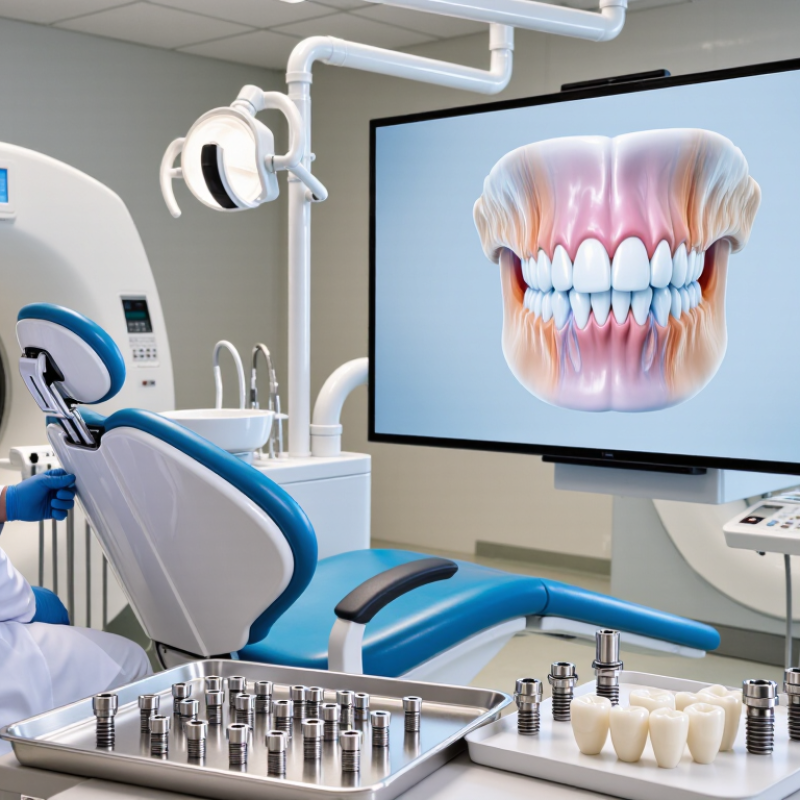
Dental implant technology refers to the tools, materials, and clinical methods used to replace missing teeth. Its scope extends beyond the implant fixture itself. It includes three-dimensional imaging, digital treatment planning, surgical guides, implant surface design, prosthetic fabrication, and follow-up monitoring. A cone-beam scan can reveal bone width near a sinus or nerve. Intraoral scans can capture bite relationships without traditional impression trays.
For global buyers, technology should be judged through clinical evidence, manufacturing quality, and professional training. Reliable systems provide clear material specifications, sterilization guidance, traceability, and maintenance instructions. Digital workflows may improve placement accuracy and reduce chairside adjustments, but they do not remove the need for clinical judgment. Bone density, gum condition, medical history, and patient expectations still affect outcomes. No technology fits every jaw. That limitation deserves honest discussion.
Tips: Ask for validation data, material certificates, compatibility details, and training support. Check whether imaging software exports standard files. Confirm how quickly replacement components can be supplied. Test the workflow with a real clinical case before wider purchasing. A polished interface can still hide gaps in support. Regularly review outcomes, because early assumptions may prove incomplete.
Top Dental Implant Technology Trends for Global Buyers - Definition and Scope of Dental Implant Technology
A structured overview of major technologies, applications, purchasing relevance, and market scope in modern dental implant care.
| Technology Trend | Definition | Primary Application | Buyer Value | Key Evaluation Criteria | Scope Status |
|---|---|---|---|---|---|
| Digital implant planning | Computer-based planning that combines three-dimensional anatomical imaging with digital prosthetic information to determine implant position, angulation, and depth. | Diagnosis, prosthetically driven planning, treatment simulation, and communication among clinicians and laboratories. | Improves visualization and supports more consistent treatment workflows before surgery. | Imaging compatibility, software usability, data export formats, training, and cybersecurity. | Established technology with expanding use in specialist and general dental practices. |
| Cone-beam computed tomography | Three-dimensional X-ray imaging that produces volumetric views of the jaws, teeth, and surrounding anatomical structures. | Assessment of bone volume, anatomical limitations, implant positioning, and complex surgical cases. | Provides information that cannot be obtained reliably from two-dimensional radiographs alone. | Radiation dose, image quality, field of view, regulatory compliance, service support, and operating cost. | Core diagnostic technology; use should follow clinical justification and radiation-safety principles. |
| Computer-guided implant surgery | A surgical approach that uses digital planning and a guide to help transfer the planned implant position to the patient. | Flapless or minimally invasive procedures, multiple-implant cases, and anatomically demanding treatments. | Can support surgical consistency, reduced deviation from the plan, and improved team coordination. | Guide accuracy, manufacturing tolerance, fixation, sterilization, workflow time, and clinician training. | Growing clinical segment; guided workflows do not replace clinical judgment or surgical skill. |
| Dynamic navigation | Real-time computer-assisted navigation that tracks surgical instruments and displays their position relative to the digital plan. | Freehand implant placement with continuous visual guidance during surgery. | Offers intraoperative flexibility while maintaining reference to the planned implant trajectory. | Tracking accuracy, calibration, line-of-sight requirements, system integration, and procedure setup time. | Emerging and expanding technology requiring dedicated training and operational protocols. |
| Digital intraoral scanning | Optical capture of oral structures to create a digital three-dimensional model without conventional impression materials. | Implant restorations, surgical planning, provisional restorations, and laboratory communication. | Improves digital workflow efficiency and enables rapid electronic transfer of clinical data. | Scan accuracy, software openness, powder-free operation, ergonomics, file compatibility, and data protection. | Mature and widely adopted component of digital restorative dentistry. |
| CAD/CAM implant prosthetics | Computer-aided design and manufacturing used to produce implant-supported crowns, bridges, bars, abutments, and surgical components. | Restorative design, milling, additive manufacturing, and customized prosthetic production. | Supports repeatable production, digital quality control, and customized restoration design. | Material certification, fit accuracy, workflow interoperability, production capacity, and quality assurance. | Established and expanding across dental laboratories, clinics, and centralized production facilities. |
| Additive manufacturing | Layer-by-layer production of dental models, guides, provisional restorations, and selected prosthetic components from digital files. | Rapid prototyping, surgical guide production, temporary restorations, and customized laboratory work. | Reduces dependence on manual fabrication for suitable applications and enables fast customization. | Validated materials, dimensional accuracy, post-processing, printer calibration, throughput, and traceability. | Fast-growing technology subject to material-specific regulatory and processing requirements. |
| Surface modification and bioactive coatings | Physical or chemical treatment of an implant surface to influence wettability, roughness, protein interaction, and bone response. | Supporting osseointegration and managing the biological interface between implant and bone. | May improve early bone-implant interaction when supported by appropriate clinical evidence. | Surface consistency, contamination control, evidence quality, shelf life, and regulatory documentation. | Established area of implant development with continuing research into enhanced biological performance. |
| Short and narrow implants | Implants designed with reduced length or diameter for selected anatomical situations where available bone is limited. | Treatment of reduced vertical bone height or narrow ridges, subject to case-specific biomechanical assessment. | May reduce the need for certain augmentation procedures in appropriately selected cases. | Indications, implant design, loading protocol, bone quality, primary stability, and long-term evidence. | Clinically available option requiring careful patient selection and restorative planning. |
| Artificial intelligence and decision support | Software that analyzes dental images or clinical data to assist with detection, segmentation, measurement, planning, or workflow prioritization. | Image interpretation, anatomical segmentation, treatment planning assistance, and administrative workflow support. | Can reduce repetitive analysis tasks and support standardized review when appropriately validated. | Validation population, sensitivity and specificity, explainability, integration, privacy, and human oversight. | Emerging category; software output should support rather than replace qualified clinical decisions. |
| Remote monitoring and digital follow-up | Use of digital communication, patient-reported information, photographs, or connected tools to support postoperative follow-up. | Monitoring healing, reinforcing hygiene instructions, scheduling reviews, and identifying symptoms that require examination. | May improve continuity of care and help prioritize in-person appointments. | Clinical escalation rules, patient accessibility, data security, documentation, and local telehealth requirements. | Developing service model that complements, but does not replace, clinical examination. |
Core Components and Materials in Modern Implant Systems
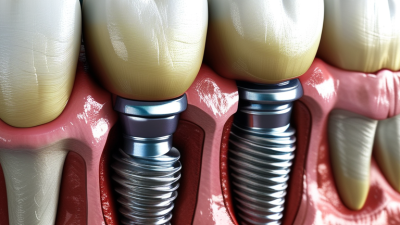
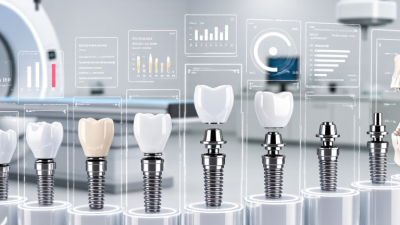
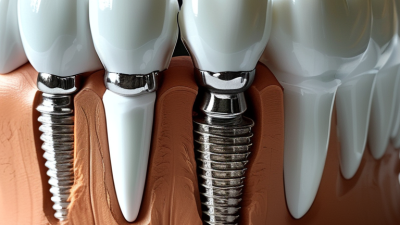
Modern implant systems are built around three working parts: the implant body, abutment, and restoration. The implant body sits inside bone and usually uses commercially pure titanium or a titanium alloy. These materials combine strength, low weight, and established biocompatibility. Surface texture matters too. Microscopic roughness can support bone attachment, but aggressive textures demand careful manufacturing and cleaning. This detail is easy to overlook.
Abutments connect the implant to the visible crown or bridge. Titanium offers toughness and predictable machining, while ceramic options can improve light transmission in thin gum tissue. The connection must resist rotation and repeated chewing forces. A tiny mismatch may allow movement, trapped debris, or screw loosening. Buyers should request tolerance data, fatigue testing, sterilization instructions, and traceable material certificates. Marketing language alone is not evidence. This is where theory meets the chair.
Modern systems also use precision screws, healing components, digital scan bodies, and bone-level measurement tools. Each component should match the implant connection exactly. Mixing parts from different systems may appear economical, yet it can create uncertain fit and warranty disputes. Procurement teams should compare thread design, corrosion resistance, packaging integrity, and regional regulatory documentation. Zirconia is not automatically superior, and titanium is not ideal for every patient. Clinical anatomy, occlusion, tissue thickness, and operator skill still influence outcomes. I would question any catalogue promising universal performance. Real cases are less tidy. A well-designed system can still fail when planning, placement, or maintenance is weak.
Digital Planning and Guided Implant Placement
Digital planning is reshaping implant treatment for global buyers.
The WHO Global Oral Health Status Report estimates that nearly 3.5 billion people live with oral diseases. This pressure increases demand for predictable, efficient implant workflows.
Digital planning combines CBCT imaging, intraoral scans, and three-dimensional software. Clinicians can inspect bone volume before surgery.
They can also position implants around nerves, sinuses, and planned restorations.
ITI consensus reports support prosthetically driven planning and careful risk assessment. Systematic reviews commonly report guided-placement deviations near 1 millimetre coronally and approximately 3 degrees angularly. Small differences still matter.
Guided surgery can transfer the approved plan to the mouth.
A printed guide may improve positioning, yet it cannot correct poor imaging or unstable seating. It is not flawless.
Soft-tissue movement, limited mouth opening, scanning errors, and operator experience can change the result.
Reports in oral implantology also stress verification and clinical judgment, rather than software dependence.
Buyers should evaluate scan compatibility, planning transparency, guide accuracy, training, and cleaning procedures.
A practical test includes checking a patient’s scan, reviewing the proposed implant axis, and confirming the guide’s fit before surgery.
Digital precision is valuable. Human oversight remains essential.
Emerging Technologies Improving Implant Treatment
Top Dental Implant Technology Trends for Global Buyers
Emerging technologies are making implant treatment more measurable, efficient, and patient-focused. Cone-beam computed tomography creates three-dimensional views of bone height, width, and nearby nerves. Intraoral scanners replace many uncomfortable impressions with accurate digital files. The change is practical. Clinicians can compare scans before and after treatment, improving communication with patients and laboratories.
Computer-guided surgery uses digital planning to support more controlled implant placement. Artificial intelligence can help identify anatomical structures and highlight potential risks. However, software suggestions still require review by qualified dental professionals. A precise screen image cannot replace clinical judgment, surgical experience, or informed consent. Small errors matter, especially when bone density differs from the original scan.
Three-dimensional printing is also improving temporary teeth, surgical guides, and custom models. New surface treatments may support faster bone integration, but outcomes depend on material quality, sterilization, patient health, and aftercare.
Remote monitoring tools can track healing through photographs and scheduled digital checks. They are useful, but not perfect.
Buyers should request clinical evidence, regulatory documentation, training support, and clear maintenance procedures before purchasing equipment. Early technologies may appear impressive while having limited long-term data. Careful evaluation remains essential for safe, consistent implant treatment across different healthcare systems.
Global Purchasing Criteria for Dental Implant Solutions
Global Dental Implant Technology Trends for Global Buyers
Global dental implant purchasing is shifting from unit price to measurable clinical reliability. The WHO Global Oral Health Status Report (2022) estimates that oral diseases affect nearly 3.5 billion people worldwide. This scale makes consistent access, training, and support essential purchasing criteria. A polished catalogue is not evidence.
Buyers should request fatigue-test results, material certificates, sterilization guidance, and lot-level traceability. ISO 14801 testing supports comparisons of implant fatigue performance under defined conditions. ISO 13485 certification indicates controlled quality management, but it does not guarantee clinical success.
The difference matters. Review surface-treatment validation, connection tolerances, prosthetic compatibility, and retrieval procedures before signing. Digital planning systems should use open, transferable file formats. Closed workflows may increase training time and replacement costs.
Fortune Business Insights estimated the global dental implant market at about US$4.6 billion in 2023. Its forecast suggests continued growth, although published estimates vary. Keep assumptions visible. Ask for post-market surveillance data, complication reporting, response times, and local regulatory documentation.
Total cost includes components, inventory, clinician training, chair time, and failed-case management. The cheapest quotation can become expensive.
No checklist is perfect. Even experienced teams may overlook compatibility during urgent procurement. A small pilot order, reviewed by clinicians and procurement specialists, can reveal weaknesses before wider adoption.
Related Posts
-
Top 10 Dental Prosthetic Solutions in China You Should Know?
-
2026 Best Tooth Replacement Solutions for Global Buyers?
-
What is Dental Implant Technology and How Does It Work?
-
China Top 10 Dental Implant Technology Companies
-

7 Tips for Buying Precision Dental Prosthetics?
-
2026 Best Modern Restorative Dentistry Trends to Watch?