
Contact Us
Top Types of Zirconia Dental Crowns for Buyers?
Zirconia dental crowns come in several forms, and the differences matter at the chairside. Buyers may encounter monolithic crowns milled from one solid block, layered crowns with porcelain over a zirconia core, and more translucent options designed for visible teeth. Each offers a different balance of strength, appearance, and processing demands. There is no single best choice for every case.
Prosthodontist Dr. Markus B. Blatz has published extensively on ceramic restorations, including zirconia. A practical takeaway from his work is simple: match the material to the clinical indication, rather than judging it by strength alone. This is a paraphrase, not a verbatim quotation. That distinction matters when expert opinions inform a purchasing decision.
A posterior crown may need to withstand heavy chewing forces. An anterior crown faces a different test: natural-looking shade and light transmission under daylight. Zirconia generations also vary. Some formulations prioritize strength, while others allow greater translucency, often with trade-offs that buyers should discuss with their dental laboratory or clinician. Ask about the specific zirconia grade, manufacturer instructions, milling and sintering requirements, and evidence supporting the intended use. Names on a product box can sound similar. They are not always interchangeable.
This guide compares the main types of Zirconia dental crowns and explains what buyers should examine before choosing. It cannot replace case-specific clinical judgment. Materials evolve, and evidence is not equally strong for every indication. A little caution helps. So does asking one more question.
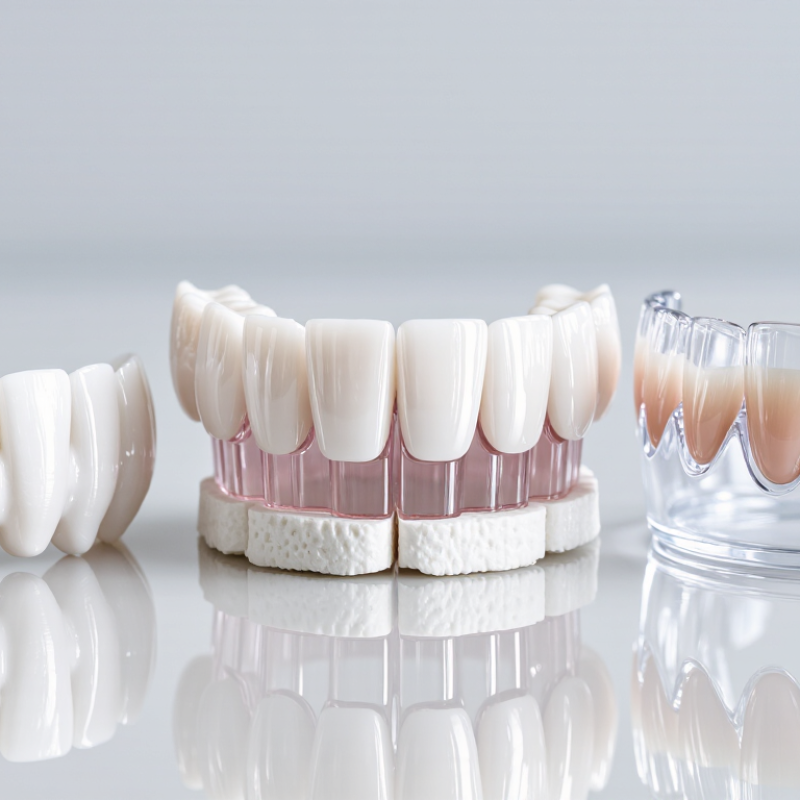
How ISO 6872 Classifies Dental Ceramics by Flexural Strength
Top Types of Zirconia Dental Crowns for Buyers?
ISO 6872 groups dental ceramics by measured flexural strength, a laboratory measure of resistance to bending. Its strength classes use minimum thresholds: 50, 100, 300, 500, and 800 MPa. Class 1 is below 50 MPa; Classes 2 through 6 begin at those respective thresholds. Higher classes indicate stronger test results, not a guarantee that every crown will perform identically.
For zirconia buyers, the class helps narrow options, but it cannot make the decision alone. A high-strength material may suit a thin or heavily loaded restoration, while translucency and appearance also matter. Ask which test method and product indication support the stated strength. Check whether the crown is monolithic or layered, and discuss bite forces, location, and design with the dental professional.
Lab results are useful, but a patient’s real bite is not a laboratory setup. Numbers matter. Still, they leave questions unanswered.
Tips: Compare the ISO class, test method, and intended use together. Request the full technical data sheet, not just a headline MPa figure. If two products look similar on paper, ask how their translucency and thickness affect the planned crown. A little uncertainty is worth acknowledging.
3Y-TZP Crowns: High Strength, Commonly Reported at 900–1,200 MPa
Among zirconia crown options, 3Y-TZP is valued for strength. It contains about three mol percent yttria and retains a largely tetragonal crystal structure. Flexural strength is commonly reported at 900–1,200 MPa, but results vary by material and test method. Check the technical documentation before comparing figures. One number is not the whole story. Traditional 3Y-TZP may appear less translucent than higher-yttria zirconia, especially under bright light. That trade-off can matter for visible front teeth.
Tips: Ask for the stated strength test method, translucency information, and recommended clinical indications. Keep the lab’s processing instructions with the product records.
For buyers, consider where the crown will be placed and how much chewing force it may face. A molar crown has different demands from a front-tooth restoration. Shade, thickness, surface finish, and the opposing tooth also affect the practical choice. A high strength rating cannot guarantee a successful result. Fit and clinical judgment still matter. I would be cautious about treating the upper end of a reported range as typical; published and supplier figures may not be directly comparable.
4Y Zirconia Crowns: Balanced Strength and Translucency, Often 600–900 MPa
4Y zirconia crowns offer a middle ground between strength and a more natural appearance. Their flexural strength is often reported around 600–900 MPa, though values vary by material and test method. They usually allow more light through than 3Y zirconia, while remaining less translucent than many 5Y options. The result can look convincing under ordinary room lighting.
Trade-offs remain.
Tips: Check the lab’s material specifications, not just the “4Y” label. Ask how the crown will be shaded and finished. A thin edge near the front tooth may reveal differences in translucency, so request clinical guidance on the planned design.
For buyers, the right choice depends on tooth position, bite forces, available thickness, and aesthetic expectations. A posterior crown may prioritize durability, while a visible tooth may need closer shade matching. Your dentist or laboratory should assess these factors together. A strength figure alone cannot predict how a crown will perform in your mouth. That detail is easy to overlook.
5Y Zirconia Crowns: Greater Translucency, Often 500–700 MPa
Five-Y zirconia is designed to let more light pass through than stronger, more opaque zirconia formulations. That added translucency can help a crown look less chalky, especially on front teeth where light catches the edges. Many materials in this category are reported around 500–700 MPa in flexural strength. Exact values vary by product and test method, so buyers should check the manufacturer’s technical documentation rather than treat the range as a guarantee.
The balance is useful, but it has limits. A dentist may consider 5Y zirconia for selected anterior crowns or other cases where appearance is a priority. It may be less suitable for high-load molars, long-span restorations, or patients who clench or grind. A neat shade match on a screen tells only part of the story. Tooth preparation, crown thickness, cementation, and the patient’s bite also affect the final result. Small details matter.
Before choosing, ask the dental team which cases the material is intended for and whether its minimum thickness fits the planned preparation. A well-made crown still depends on sound clinical judgment. I would pause if a strength figure is presented without its testing context. More translucency is appealing, but it is not automatically the better choice.
Typical Flexural Strength Ranges of Dental Zirconia
5Y zirconia generally offers greater translucency than 3Y and 4Y zirconia, with typical flexural strength often around 500–700 MPa. Strength ranges vary by material, manufacturer, and test method; crown selection should also consider clinical indication and restoration design.
How Buyers Match Zirconia Types to ISO 6872 Strength Classes and Use Cases
Buyers should compare zirconia by both composition and verified ISO 6872 strength class. The class reflects measured flexural strength under specified test conditions; it does not predict every clinical outcome. Check the current standard and the material’s technical sheet, since classifications and indications can differ. Do not treat “high strength” as a complete specification.
For posterior crowns, bridges, or cases with limited space, higher-strength zirconia, often based on 3Y composition, may be appropriate. More translucent 4Y or 5Y materials can suit visible single crowns, but generally offer lower strength than 3Y. Match the listed indication to the restoration: a single unit is not the same load challenge as a multi-unit bridge. Short spans matter. So do connector dimensions.
Look beyond the class number. Review minimum wall thickness, preparation design, cementation guidance, and restrictions on span length. Ask for test data tied to the exact material, not a generic zirconia category. ISO testing helps buyers compare materials, but actual performance also depends on fit, polishing, occlusion, and manufacturing quality. A neat spreadsheet can still miss a thin connector or heavy bite. That is worth checking twice.
| Zirconia Type | Typical Composition | Typical Flexural-Strength Range* | ISO 6872 Strength Benchmark** | Commonly Considered Use Cases | Optical Characteristics | Buyer Checks |
|---|---|---|---|---|---|---|
| High-strength 3Y-TZP | Approximately 3 mol% yttria-stabilized zirconia; predominantly tetragonal phase. | About 800–1,200 MPa, depending on product, processing and test method. | Often meets the 800 MPa strength threshold associated with ISO 6872 Class 6 when the specific material is tested and classified accordingly. | Posterior monolithic crowns and bridges where strength is a priority; suitability for a particular span depends on the material’s approved indications and design requirements. | Generally less translucent than higher-yttria grades; masking and strength are often prioritized over maximum translucency. | Confirm the tested ISO classification, approved bridge spans, minimum connector dimensions, preparation guidance and sintering instructions. |
| Balanced 4Y zirconia | Approximately 4 mol% yttria-stabilized zirconia; a mixed phase composition intended to balance strength and translucency. | About 600–900 MPa; published and declared values vary by formulation and test method. | May meet the 500 MPa Class 5 benchmark; some products may reach the 800 MPa Class 6 threshold. Verify the exact product classification. | Single-unit anterior or posterior crowns where a balance of strength and appearance is desired; some products are also indicated for specified bridge designs. | Typically more translucent than conventional 3Y-TZP, with product-dependent variation. | Check whether the stated value is a minimum or typical value, and whether the intended restoration and span appear in the manufacturer’s instructions for use. |
| High-translucency 5Y zirconia | Approximately 5 mol% yttria-stabilized zirconia; greater cubic-phase content generally increases translucency. | About 500–700 MPa, with variation among products and test methods. | Often aligned with the 500 MPa Class 5 strength benchmark when the tested product meets the relevant requirement; do not infer a class from composition alone. | Esthetic single-unit crowns, commonly in anterior or selected posterior situations when the product’s approved indications and clinical conditions permit. | Usually offers greater translucency than 3Y-TZP; shade, thickness, substrate color and surface finish affect the final appearance. | Review the product’s strength data, approved indications, minimum thickness and any limitations for bridges or high-load situations. |
| Multilayer or gradient zirconia | A disc or block with gradual or layered changes in shade, translucency and sometimes composition across its height. | Product-dependent; the value may differ by layer or region and should be checked in the technical documentation. | There is no single ISO class assigned just because a material is multilayer. Use the product’s tested classification and applicable indication. | Crowns where a more lifelike shade or translucency gradient is desired; bridge suitability depends on the specific material and design instructions. | Can provide a transition in color or translucency, but the result depends on restoration position within the blank and milling orientation. | Ask for layer-specific strength information, nesting guidance, shade mapping and the approved uses for the exact blank. |
| Layered zirconia restoration | A zirconia framework or core veneered with a separate ceramic material; this describes a restoration design, not a distinct yttria grade. | The zirconia framework’s value is product-specific; the veneering ceramic has its own properties and requirements. | Classification applies to the ceramic material and its intended use as tested; it should not be inferred solely from the finished restoration’s appearance. | Esthetic restorations where additional surface characterization is wanted; use requires consideration of veneer support, thickness and chipping risk. | Can allow detailed characterization, but the veneering layer may be susceptible to chipping if design and support are inadequate. | Confirm compatibility of framework and veneering ceramics, firing protocol, framework design and the relevant product instructions. |
ISO 6872 strength reference: Commonly cited flexural-strength thresholds include 50 MPa (Class 1), 100 MPa (Class 2), 300 MPa (Class 3), 300 MPa (Class 4), 500 MPa (Class 5) and 800 MPa (Class 6). The classes also relate to material type and intended indications; strength alone does not establish clinical suitability. Confirm the applicable ISO 6872 edition, test method, product-specific classification and instructions for use before selecting a material. *Ranges are indicative and vary by formulation, specimen preparation and test method. **The benchmark shown is not a certification claim for any individual product.
Related Posts
-
7 Tips for Buying Zirconia Dental Crowns?
-
2026 How to Choose the Best Oral Rehabilitation Treatments?
-

How to Choose the Best Smile Restoration Treatments in 2026?
-

China Top 10 Implant Supported Dentures Suppliers?
-
Top 10 Dental Implant Restoration Types for Global Buyers
-

China Top 10 Digital Dental Workflow Suppliers