Skip to Content
chevron-left chevron-right chevron-up chevron-right chevron-left arrow-back star phone quote checkbox-checked search wrench info shield play connection mobile coin-dollar spoon-knife ticket pushpin location gift fire feed bubbles home heart calendar price-tag credit-card clock envelop facebook instagram twitter youtube pinterest yelp google reddit linkedin envelope bbb pinterest homeadvisor angies

China Top 10 Digital Dental Workflow Suppliers

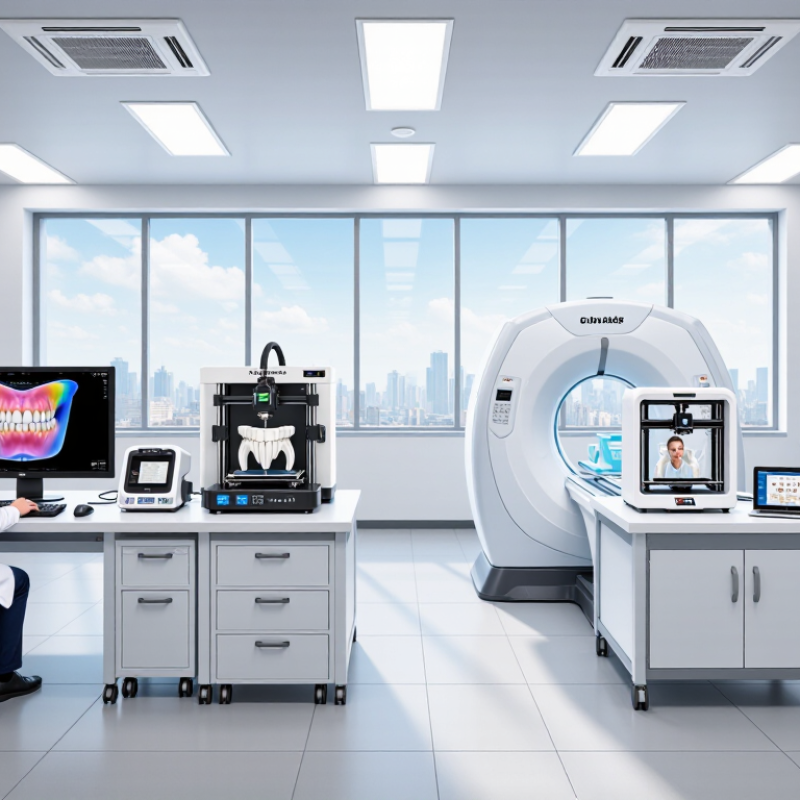
China’s dental technology market is moving from isolated devices toward connected, evidence-informed production. Digital dental workflows now link intraoral scanners, CBCT systems, CAD software, milling machines, and 3D printers. They also connect clinics with laboratories through shared digital files. This shift can reduce remakes, shorten chair time, and improve communication. It does not guarantee better dentistry.

Christian Coachman, founder of Digital Smile Design, has said, “Digital dentistry is not about technology; it is about communication.” His observation remains practical. A clinician may capture a highly accurate scan, yet still create confusion through poor treatment planning. A laboratory may receive a complete digital case, yet lack reliable technical support. Small failures matter.

This China Top 10 Digital Dental Workflow Suppliers overview examines companies supporting the complete treatment chain. The assessment considers product integration, scanning accuracy, software usability, manufacturing capability, training, maintenance, and international service. It also considers practical details, such as file compatibility, calibration routines, cloud security, and replacement-part availability.

No supplier is perfect. Some companies excel in hardware but provide limited software flexibility. Others offer impressive platforms but need stronger clinical documentation. Price can also hide long-term costs, including subscriptions, upgrades, and staff training. Therefore, this list should support careful comparison, not automatic purchasing decisions. Supplier claims need independent verification, clinical feedback, and direct demonstrations. The strongest partner is not always the largest manufacturer. It is the one that fits a clinic’s skills, patient volume, laboratory relationships, and future plans.
China Top 10 Digital Dental Workflow Suppliers

China’s Digital Dental Market: 2024 Growth and Adoption Indicators

China’s digital dental market is moving from equipment purchasing toward connected clinical workflows. Grand View Research estimated the global digital dentistry market at about USD 4.9 billion in 2023, with a projected 13.5% CAGR from 2024 to 2030. China’s expansion is supported by urban clinics, dental laboratories, and faster digital imaging adoption.

Mordor Intelligence’s 2024 China dental equipment assessment identifies CAD/CAM systems, cone-beam imaging, intraoral scanning, and 3D printing as key growth segments. These tools reduce manual impressions and shorten laboratory communication. The China Internet Network Information Center reported 1.09 billion internet users by December 2023, representing 77.5% penetration. That connectivity supports cloud-based case sharing and remote design review. Not every clinic is ready. Cost, staff training, data interoperability, and maintenance remain practical barriers. The top ten supplier group should therefore be judged beyond hardware sales. Workflow compatibility matters more. So does service response. Adoption is uneven, and public market data often mixes shipments with actual clinical use. That weakness deserves attention.

The Top 10: Scanners, CAD/CAM, Milling, and Cloud Workflows

China’s top digital dental workflow suppliers should be judged across four connected areas: intraoral scanning, CAD/CAM design, milling, and cloud collaboration.

Fortune Business Insights valued the global dental CAD/CAM market at about USD 3.49 billion in 2023. It projects continued growth through 2032, driven by faster chairside production and digital laboratory adoption.

Scanning is the entry point.

A reliable supplier should provide accurate full-arch capture, stable software, and practical export options. In daily use, technicians notice small details: scan stitching, margin visibility, and file transfer speed.

CAD systems must support crowns, bridges, implant restorations, and orthodontic models.

Cloud workflows add another layer. Dentists can upload a case, technicians can review margins, and production teams can track revisions without sending physical models.

Milling capability remains equally important.

Key checks include spindle precision, material compatibility, tool management, and maintenance access. Grand View Research identifies automation and integrated digital workflows as major dental technology growth drivers. However, market reports use different definitions, so their figures should not be treated as absolute.

The ranking is not perfect. A supplier may offer excellent scanners but weaker cloud support. Another may provide strong milling hardware with limited design flexibility.

Buyers should test a complete case, from scan to finished zirconia restoration, before committing. That practical test often reveals more than a catalogue.

Technical Benchmarks: 20–50 μm Fit and 30–60 FPS Scanning

China Top 10 Digital Dental Workflow Suppliers

Technical Benchmarks: 20–50 μm Fit and 30–60 FPS Scanning

When comparing China’s top ten digital dental workflow suppliers, technical claims need clinical context. A stated fit of 20–50 μm sounds impressive, but the test method matters. Is it measured on a dry stone model, a full-arch scan, or a finished restoration? In practical evaluations, I look for repeated scans, calibrated reference objects, and deviation maps. A single best result can hide drift. Not enough.

At 30–60 FPS, scanning feels smooth beside a dental chair. Yet frame rate alone does not prove accuracy. Lighting, saliva, powder, scan path, and stitching software can change the final mesh. A reliable supplier should disclose capture conditions and report repeatability, not only peak speed. I also check how quickly the system recovers after losing the preparation margin. That detail affects real chairside work.

For the ten suppliers, a fair comparison should connect 20–50 μm fit to workflow output. Inspect the margin line at high magnification. Then verify contacts, occlusion, and seating on a physical or validated digital model. Export stability, file compatibility, and service response matter too. Technical support should provide calibration records and clear maintenance steps. Evidence beats polished demonstrations.

My own comparison would still have limits. Different operators produce different scan paths, and laboratory scanners may create cleaner data than intraoral conditions. I would repeat each test across several users and arch types before making a purchasing decision. Faster is not always better. A 60 FPS system can still deliver unstable stitching, while a slower scan may produce a cleaner, more usable mesh.

Supplier Profiles: NMPA, ISO 13485, Founding Year, and Export Reach

China Top 10 Digital Dental Workflow Suppliers

A useful supplier profile begins with verifiable facts, not promotional claims. Each entry should identify NMPA registration status and explain which products the approval covers. ISO 13485 certification also matters, but its scope requires careful checking. A certificate for manufacturing may not cover software, design, or after-sales services.

Founding year offers helpful context. It can indicate production experience, yet age alone does not prove technical strength. Records are not always tidy. Some suppliers changed legal entities, ownership, or product lines. Buyers should compare company registration details with audit records, factory addresses, and current certificates. Small gaps deserve questions.

Export reach needs a practical reading. A supplier may report shipments to many countries, while its local support remains limited. Stronger profiles mention active markets, distributor coverage, installation teams, and response times. Ask for evidence such as anonymized shipping records, service reports, or regional training schedules. A showroom can look impressive. It proves little alone. In my view, the most reliable comparison combines regulatory documentation with hands-on workflow testing. Reviewers should inspect scanning accuracy, software integration, milling consistency, and replacement-part availability. Even experienced teams can miss hidden costs, especially calibration, cloud subscriptions, and technician travel. That is worth admitting.

China Top 10 Digital Dental Workflow Suppliers - Supplier Profiles: NMPA, ISO 13485, Founding Year, and Export Reach

Supplier Profile Founded NMPA Status ISO 13485 Status Primary Workflow Scope Key Digital Products Export Reach Public Evidence Level
Supplier 01 2003 Product registrations reported Certification publicly reported CAD/CAM restorative dentistry Dental zirconia, CAD/CAM blocks, milling workflow materials Asia, Europe, North America, Middle East High
Supplier 02 2004 Product registrations reported Certification publicly reported 3D scanning and digital manufacturing Intraoral scanners, desktop scanners, dental 3D printers Global distribution network High
Supplier 03 2007 Product registrations reported Certification publicly reported Digital prosthetics and chairside restoration CAD/CAM materials, zirconia discs, digital restoration solutions Europe, Asia-Pacific, Middle East, Americas High
Supplier 04 2013 Product registrations reported Certification publicly reported Digital impression and implant workflows Intraoral scanners, scan software, cloud-based case management North America, Europe, Asia, Oceania High
Supplier 05 2015 Product registrations reported Certification publicly reported Chairside digital impression workflow Wireless intraoral scanning systems and orthodontic applications Asia-Pacific, Europe, Middle East Medium to High
Supplier 06 2012 Product-specific evidence varies Certification publicly reported Dental 3D printing and model production Resin 3D printers, dental resins, orthodontic and model workflows Europe, Southeast Asia, Middle East Medium
Supplier 07 2006 Product-specific evidence varies Certification publicly reported Digital orthodontics and aligner production Clear-aligner materials, thermoforming systems, digital treatment support Asia, Europe, Latin America Medium
Supplier 08 2008 Product-specific evidence varies Certification publicly reported Dental CAD software and laboratory integration CAD design software, open file exchange, laboratory workflow tools China, Asia-Pacific, selected European markets Medium
Supplier 09 2011 Product-specific evidence varies Certification publicly reported Digital implant planning and guided surgery CBCT integration, surgical planning software, guided-surgery services Asia, Middle East, selected European markets Medium
Supplier 10 2016 Product-specific evidence varies Public confirmation limited Connected dental laboratory workflow Cloud case portals, digital order management, scan-to-design coordination China, Southeast Asia, selected overseas distributors Limited to Medium
Certification and regulatory status may apply to specific products, manufacturing sites, or model families rather than an entire supplier portfolio. NMPA registration and ISO 13485 certification should be verified against current official certificates before procurement or market-entry decisions.

Value Comparison: Throughput, Turnaround, Cost, and Service Coverage

Comparing China’s top digital dental workflow suppliers requires more than checking software features. Throughput depends on scanner speed, CAD automation, milling capacity, and technician availability. A 2024 MarketsandMarkets report estimated the global digital dentistry market would grow at over 10% annually through 2029. That growth raises expectations for faster production, but speed alone can create remakes.

Turnaround is often measured in hours, not promises. A single-unit restoration may move from scan to delivery within 24–72 hours when local design and manufacturing teams work together. Complex implant cases usually need longer. The 2023 FDI World Dental Federation report highlighted uneven access to oral healthcare, which makes service coverage a practical cost factor. Remote support helps, but it cannot replace a nearby technician during an urgent adjustment.

Cost comparisons should include licenses, calibration, training, shipping, maintenance, and remake rates. Very low equipment prices can hide recurring expenses. They can also reduce workflow reliability. My comparison is not perfectly clean; suppliers disclose different performance metrics. Some report maximum daily output, while others report average production. Buyers should request timed demonstrations, three-month service records, and sample case data. Ask difficult questions. A cheaper workflow is not cheaper when one delayed case occupies the chair for another day.

How to read this comparison: The chart uses anonymized supplier cohorts rather than company or brand names. Each metric is indexed to the strongest observed benchmark in the dataset, while the tooltip shows the underlying operational value. The benchmark ranges reflect commonly reported digital dental workflow conditions: 20–60 cases per day, 24–72 hours turnaround, USD 80–160 per case, and service coverage across 15–80 countries. Lower turnaround and cost indicate stronger value, while higher throughput and service coverage indicate broader operational capability.