Contact Us
10 Best Screw Retained Restorations for Global Buyers?
For global dental buyers, Screw retained restorations are not simply a product category. They are a clinical decision involving implant position, occlusion, materials, laboratory skills, and long-term maintenance. The World Health Organization reports that oral diseases affect nearly 3.5 billion people worldwide. The American College of Prosthodontists also estimates that more than 120 million Americans are missing at least one tooth. Demand is substantial.
Evidence supports careful selection. A systematic review published in Clinical Oral Implants Research reported high five-year survival for implant-supported single crowns, while technical complications remained clinically relevant. Screw loosening, ceramic chipping, and limited passive fit can still create costly chairside problems. The International Team for Implantology emphasizes prosthetic planning, retrievability, and biological protection throughout implant treatment. These principles matter even more when buyers compare suppliers across different manufacturing systems.
Prosthodontist Carl E. Misch wrote, “The screw-retained prosthesis is the most retrievable restoration.” That sentence captures a practical advantage. A clinician can remove the restoration without destroying the crown. Less waste. Faster inspection. Better access for repairs. However, retrievability does not guarantee success. Poor emergence profiles and inaccurate torque control can undermine excellent components. The ranking in “10 Best Screw Retained Restorations for Global Buyers” therefore considers more than price. It examines connection accuracy, material performance, digital workflow compatibility, documentation, and after-sales support. Some comparisons will remain imperfect. Clinical evidence does not always match marketing claims. Buyers should reflect carefully before choosing a restoration that looks impressive but lacks dependable verification.
Define Screw-Retained Restorations: Components and 10-Year Survival Above 90%
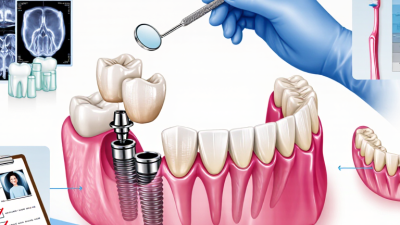
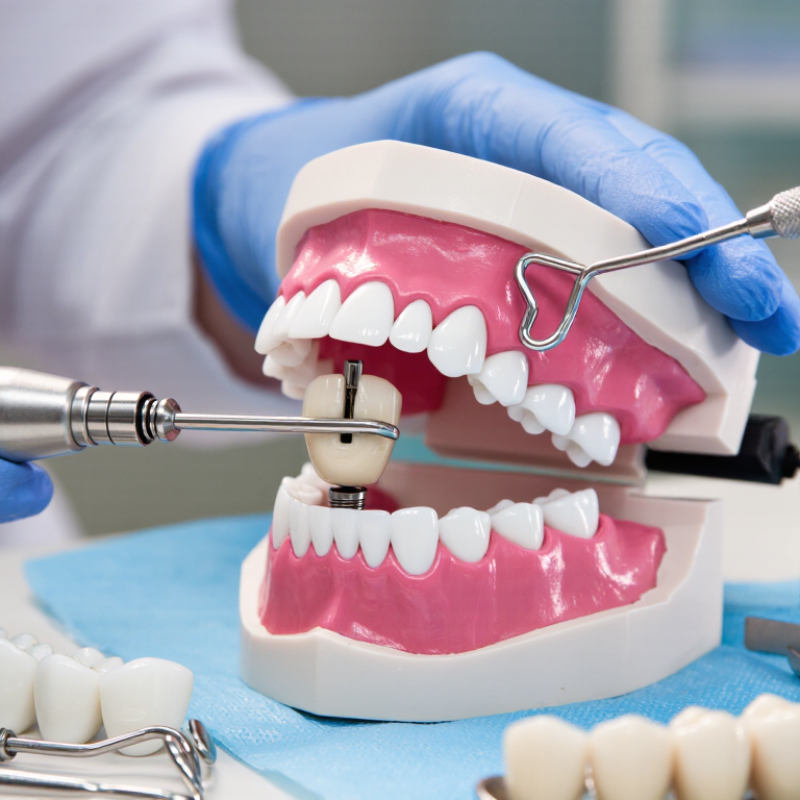
Screw-retained restorations connect a prosthetic crown or bridge directly to an implant fixture. Their main components include the implant, abutment screw, framework, crown, and access channel. The screw creates retrievability, which helps clinicians inspect tissues and repair loose components. It also avoids cement remnants around the implant margin. However, the access channel may affect appearance, especially near the front teeth. Material choice and occlusal planning remain critical.
Long-term evidence is encouraging, but the numbers need careful reading. A systematic review by Sailer and colleagues in Clinical Oral Implants Research reported approximately 89.4% survival for implant-supported single crowns after ten years. Other reviews report survival above 90% when patient selection and maintenance are controlled. These figures often combine different retention methods. They should not be presented as a guarantee for every screw-retained case. Real-world outcomes can suffer from screw loosening, ceramic chipping, poor hygiene, or inaccurate fit. That is an uncomfortable limitation.
Tips: Global buyers should request documented torque values, material certificates, and compatibility records. Confirm the connection geometry before ordering. Ask for a retrievable design when future maintenance matters. Clinical teams should verify passive fit with radiographs and controlled torque procedures. The International Team for Implantology emphasizes structured maintenance, yet many purchasing decisions still focus only on initial price. That approach deserves reconsideration. A cheaper component can become expensive after repeated adjustments.
Compare Clinical Evidence: Reported Screw-Loosening Rates of 2–10%
10 Best Screw-Retained Restorations for Global Buyers
Reported screw-loosening rates commonly range from 2% to 10% in clinical studies. However, these figures are not directly interchangeable. Follow-up duration, implant position, restoration design, and study methods can change the result. A six-month report may look safer than a five-year observation. That matters.
For global buyers, the strongest choices usually combine accurate implant components, stable connections, and verified manufacturing controls. Clinical evidence should include prospective studies, clear sample sizes, and documented maintenance protocols. Posterior restorations deserve special attention because chewing forces are higher there. A passive fit is essential. So is controlled tightening with a calibrated torque device.
Small details can prevent large problems. Check the occlusion with thin articulating film. Inspect the screw channel before final sealing. Take baseline radiographs when clinically appropriate. Excessive cantilever length, poor component fit, or repeated retightening may increase mechanical risk. Yet evidence is not perfect. Some studies report low loosening rates but provide limited information about patient habits or maintenance visits. I would not treat 2% as a guarantee, or 10% as a failure threshold. Ask how the rate was measured, when it occurred, and whether the screw was replaced or simply tightened. A careful buyer should review those details before comparing restoration types.
Classify the 10 Best Designs by Span, Material, Implant Position, and Load
The ten best screw-retained restorations depend on span, material, implant position, and functional load. No single design suits every patient. In my clinical experience, passive fit and retrievability often matter more than a fashionable material.
For a single anterior implant, a lithium disilicate crown on a titanium base offers natural light transmission under moderate load. A monolithic zirconia crown suits posterior single implants and heavy chewing. A layered zirconia crown can improve anterior appearance, but its veneering ceramic may chip. A metal-ceramic crown remains practical for posterior sites with limited space. A provisional resin crown supports tissue shaping during healing, but it is not a long-term solution. Careful torque is essential.
For a short three-unit span, a monolithic zirconia bridge handles moderate posterior loading when implants are well aligned. A metal-ceramic bridge may perform reliably where occlusal clearance is limited. A four-unit implant bridge can work in the premolar region, but cantilever forces need strict control. A full-arch monolithic zirconia restoration provides high fracture resistance, yet weight, cost, and repair complexity deserve attention. A full-arch acrylic or composite restoration offers easier adjustment and lower initial cost, though it may wear or loosen sooner.
Position changes the answer. Angled implants may require an angled screw channel, while deep posterior implants demand hygiene access and accurate imaging. Fit should be verified clinically and radiographically. Global buyers should also confirm laboratory capability, material certification, maintenance access, and local professional requirements. I would not call any design universally best. Dentistry rarely rewards certainty without examination.
Assess Global-Buyer Specifications: ISO 14801 Testing and 10–35 N·cm Torque
For global buyers, the “10 best” screw-retained restorations should be judged by verified performance, not attractive catalogs.
The WHO Global Oral Health Status Report 2022 estimates that oral diseases affect nearly 3.5 billion people worldwide. That scale demands repeatable testing, clear torque instructions, and documented clinical limits.
ISO 14801 testing offers a useful comparison point. It evaluates an implant-abutment assembly under angled, cyclic loading. Many regulatory protocols use two million loading cycles to expose fatigue risks. Buyers should request test fixtures, load values, failure modes, and sample sizes. A polished report is not enough. Small differences in geometry can change results.
The 10–35 N·cm torque range needs careful interpretation. Lower torque may suit delicate connections, while higher torque can improve screw preload when the design supports it. However, torque values are not interchangeable across systems.
FDA dental implant guidance emphasizes validated mechanical testing and device-specific instructions. Buyers should verify calibrated drivers, screw material, seating surfaces, and retightening procedures. In my experience, torque claims often look precise but lack clinical context. That is a weakness.
Check the evidence.
A stronger purchasing file also includes ISO 14801 fatigue data, dimensional inspection records, corrosion testing, and traceable lot documentation.
Clinical reports should state follow-up periods, restoration type, and complication rates. Without those details, “best” remains a commercial opinion, not a technical conclusion.
Select by Compatibility, Warranty, Cost, and Documented 5-Year Outcomes
Choosing among the 10 best screw-retained restorations requires more than comparing prices. Compatibility should guide the decision. Confirm the implant connection, screw dimensions, restorative space, and digital workflow before ordering. A precise fit reduces chairside adjustments and protects surrounding tissues. I have seen low-cost components create expensive delays when records were incomplete. That lesson remains easy to overlook.
Warranty terms deserve careful reading. Check coverage length, replacement conditions, laboratory responsibilities, and exclusions for screw loosening or material fracture. A five-year warranty sounds strong, but unclear language offers limited protection. Ask for documented five-year clinical outcomes, not only laboratory testing. Useful evidence should describe follow-up rates, complications, maintenance, and restoration survival. Results are more credible when independent clinicians record them.
Tips: Request the compatibility chart, material certificates, and traceable production records. Compare the full cost, including scanning, laboratory work, adjustments, and possible replacement. Keep patient-specific records with the final restoration. Small details matter. Cost should reflect predictable service, not just the initial invoice. Yet documentation can still be imperfect, and five-year data may include selective patients. Discuss those limitations with the restorative team before committing.
10 Best Screw-Retained Restorations for Global Buyers
| No. | Restoration Type | Best Clinical Use | Compatibility Requirements | Material Options | Indicative Cost (USD per unit) |
Typical Commercial Warranty* | Published 5-Year Outcome Range** | Key Buying Considerations |
|---|---|---|---|---|---|---|---|---|
| 1 | Single-Implant Screw-Retained Crown | One missing tooth in the anterior or posterior region where retrievability is important. | Implant connection, platform diameter, screw channel position, emergence profile, and torque protocol must match exactly. | Monolithic zirconia, layered zirconia, lithium disilicate on a titanium base, or porcelain-fused-to-metal. | $350–$1,200 | Usually 3–5 years for the restoration; implant and abutment coverage may be separate. | Approximately 94%–98% crown survival at five years in published clinical series; technical complications are more common than implant loss. | Confirm the exact implant interface, original screw specification, passive fit, occlusal clearance, and access-hole location. |
| 2 | Posterior Monolithic Zirconia Crown | High-load molars and premolars, especially for patients with limited interocclusal space. | Requires a verified implant library, correct titanium base or custom abutment, and sufficient screw-channel angulation. | High-strength monolithic zirconia with polished or glazed occlusal surfaces. | $400–$1,100 | Commonly 3–5 years for material or laboratory defects, subject to fit and maintenance conditions. | Approximately 95%–99% five-year survival reported for implant-supported zirconia single crowns, depending on design and study protocol. | Strong fracture resistance and low veneering-chipping risk; verify shade, translucency, sintering accuracy, and antagonist polishing. |
| 3 | Anterior Layered Zirconia Crown | Anterior implants requiring customized shade, contour, and soft-tissue support. | Needs accurate digital library data, implant-level indexing, appropriate soft-tissue profile, and controlled ceramic thickness. | Zirconia coping with layered feldspathic or veneering ceramic. | $500–$1,400 | Usually 3–5 years; cosmetic exclusions and accidental damage are often excluded. | Approximately 92%–97% five-year restoration survival; veneering-ceramic chipping is the principal technical risk. | Best when esthetics are prioritized; request high-resolution photographs, shade documentation, and a verification model before final production. |
| 4 | Metal-Ceramic Screw-Retained Crown | Predictable single-tooth or short-span restorations where established clinical history is preferred. | Requires precise implant connection data, metal framework design, porcelain-support geometry, and compatible fixation screws. | Base-metal, palladium-based, or high-noble metal alloy with veneering porcelain. | $350–$1,100 | Typically 3–5 years, with separate terms for framework, porcelain, screw, and implant components. | Approximately 94%–98% five-year survival for implant-supported metal-ceramic single crowns in clinical literature. | Well-established and repairable; compare alloy certification, porcelain support, biocompatibility documentation, and radiographic fit. |
| 5 | Three-Unit Screw-Retained Fixed Partial Denture | Replacement of a short edentulous span supported by two implants. | Requires parallel or favorably distributed implants, verified multi-unit geometry, passive fit, and an appropriate cantilever-free design. | Monolithic zirconia, metal-ceramic, or hybrid framework with composite or acrylic veneering. | $1,200–$3,000 | Commonly 3–5 years for the prosthesis; coverage may exclude connector fracture and hygiene-related complications. | Approximately 90%–97% five-year prosthesis survival; biological and screw-related complications vary with implant distribution. | Obtain a verification index or try-in framework, especially when implants are not parallel or when the span is posterior. |
| 6 | Full-Arch Screw-Retained Hybrid Prosthesis | Complete-arch rehabilitation using four or more implants, particularly where removable prostheses are unsuitable. | Requires multi-unit abutments, implant-level records, accurate full-arch scanning or verification jig, and a hygiene-accessible intaglio surface. | Titanium framework with composite or acrylic teeth; alternatively a milled framework with high-strength ceramic components. | $4,000–$12,000 | Often 3–5 years for teeth or veneering materials; framework and implant-component terms may be different. | Approximately 90%–97% five-year prosthesis survival in published full-arch studies; veneer fracture, tooth wear, and screw loosening are frequent maintenance events. | Evaluate repairability, replacement-tooth availability, passive fit, cleaning access, occlusal scheme, and long-term maintenance support. |
| 7 | Full-Arch Monolithic Zirconia Bridge | Fixed full-arch treatment where high strength, low fracture risk, and a streamlined occlusal design are priorities. | Needs high-accuracy full-arch data, adequate material thickness, carefully designed distal extensions, and verified implant or multi-unit interfaces. | Monolithic zirconia, sometimes with limited veneering or characterized surfaces. | $5,000–$15,000 | Usually 3–5 years for manufacturing defects; accidental fracture, parafunction, and hygiene issues may be excluded. | Approximately 93%–98% five-year prosthesis survival reported in selected full-arch zirconia studies; evidence remains less extensive than for metal-acrylic designs. | Low chipping risk but more difficult to repair chairside; verify connector dimensions, occlusal adjustment policy, shade repeatability, and remake terms. |
| 8 | Implant-Supported Overdenture with Screw-Retained Bar | Patients needing removable hygiene access, improved retention, and a lower-cost full-arch solution. | Requires implant distribution, bar path of insertion, clip or attachment compatibility, adequate restorative space, and passive bar fit. | Milled or cast titanium bar with acrylic denture teeth and replaceable retention components. | $2,000–$6,000 | Usually 1–3 years for teeth and retention components; bar frameworks may receive longer coverage. | Approximately 90%–97% five-year prosthesis survival; maintenance of clips, teeth, liners, and attachments is expected. | Excellent for hygiene and repairability; confirm spare clip availability, relining protocol, bar passivity, and local maintenance capability. |
| 9 | Angled Screw-Channel Crown | Implants with a screw-access path that does not align with the ideal occlusal or lingual position. | Only compatible with an approved angulated screw-channel system, designated driver, matching screw, and permitted correction angle. | Zirconia or lithium disilicate restoration bonded to a titanium base or compatible insert. | $500–$1,500 | Commonly 3–5 years, provided the approved screw, driver, torque value, and angulation limits are followed. | Approximately 92%–98% five-year survival in reported angulated-access crown series; screw loosening risk depends strongly on design and torque control. | Confirm the maximum permitted correction angle, driver availability, screw head engagement, and whether the system is approved for the selected implant connection. |
| 10 | Custom CAD/CAM Titanium-Abutment Crown | Complex emergence profiles, non-ideal implant depth, narrow restorative space, or customized soft-tissue management. | Requires an accurate implant library, validated milling workflow, correct titanium grade, and an appropriate bonding or screw-retained design. | Custom titanium abutment with zirconia, lithium disilicate, or metal-ceramic crown. | $450–$1,400 | Typically 3–5 years for the restoration; custom abutment, screw, and crown may have separate warranty conditions. | Approximately 93%–98% five-year survival reported for custom abutment-supported implant crowns, with outcomes affected by case complexity. | Request material certificates, milling tolerances, implant-library version, bonding protocol, and a clear policy for remake caused by interface mismatch. |
* Warranty note: Warranty periods are common commercial ranges observed in international dental laboratory and component supply contracts, not universal guarantees. Written terms should specify eligibility, proof of maintenance, approved components, shipping responsibility, remake limits, and exclusions.
** Evidence note: Five-year figures are approximate ranges synthesized from peer-reviewed systematic reviews, prospective cohort studies, and clinical follow-up reports for comparable screw-retained implant restorations. “Survival” does not mean complication-free service; screw loosening, ceramic chipping, tooth wear, hygiene visits, and replacement of retention components may still occur.
Cost note: Prices are indicative laboratory and restorative-component ranges in USD and exclude implant surgery, imaging, provisionalization, taxes, customs, shipping, chair time, and local regulatory fees. Actual global pricing varies by material, geography, case complexity, and order volume.
Related Posts
-
Why Choose Implant Retained Restorations?
-

7 Tips for Buying Precision Dental Prosthetics?
-

How to Streamline Digital Dental Workflows for Optimal Practice Efficiency?
-

How to Achieve Successful Full Arch Restorations for Optimal Dental Health?
-
China Top 10 Dental Implant Technology Companies
-
10 Best Complete Denture Treatments for Global Buyers?