Contact Us
What Are the Top China Dental Bridge Restorations?
Choosing among the top Dental bridge restorations requires more than comparing prices, materials, or appearance. Each option must match the patient’s bite, gum health, remaining teeth, bone support, and long-term expectations.
The World Health Organization’s Global Oral Health Status Report (2022) estimates that nearly 3.5 billion people experience oral diseases worldwide. Tooth loss remains a widespread clinical concern. The report also links untreated oral conditions with pain, reduced nutrition, and lower quality of life. These findings explain why reliable tooth replacement matters beyond cosmetics.
Common choices include conventional fixed bridges, cantilever bridges, Maryland bridges, and implant-supported bridges. Conventional bridges can restore chewing efficiently when neighboring teeth provide strong support. Maryland bridges may preserve more tooth structure, especially in selected front-tooth cases. Implant-supported designs avoid relying entirely on adjacent teeth, but surgery, bone volume, healing time, and maintenance affect suitability.
Clinical evidence does not identify one universal winner. A 2023 systematic review in the Journal of Prosthetic Dentistry emphasized that bridge survival depends on design, materials, oral hygiene, and patient selection. However, results vary between studies. That limitation deserves attention.
Material quality matters.
So does daily care.
Ceramic bridges may provide lifelike translucency near the front teeth. Zirconia often offers strength for demanding areas, although shade matching can require careful laboratory work. Metal-ceramic restorations remain clinically established, yet some patients dislike visible metal margins.
This guide compares leading Dental bridge restorations through clinical indications, durability, aesthetics, cost factors, and maintenance. The most attractive choice is not always the most durable one. A qualified dentist should confirm the final decision after examination, radiographs, and bite assessment.
Types of Dental Bridge Restorations Available in China
What Are the Top China Dental Bridge Restorations?
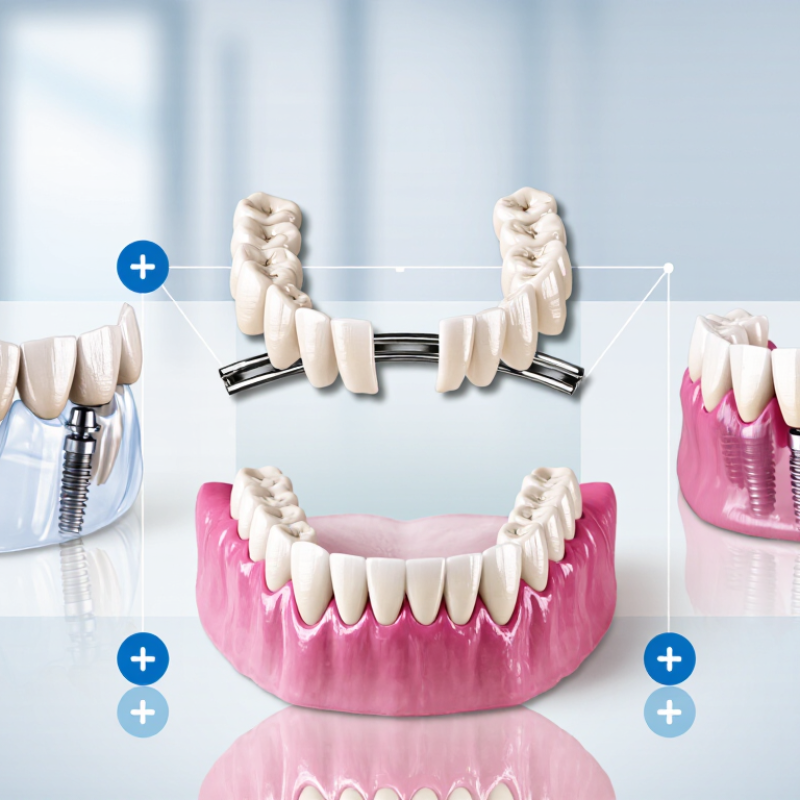
China offers several dental bridge restoration types, and each suits different clinical needs. A traditional fixed bridge uses crowns on neighboring teeth to support one or more replacement teeth. It works well when the abutment teeth have strong roots and enough enamel. Fit matters. Poorly shaped margins may trap food and irritate the gums.
A cantilever bridge attaches to one supporting tooth, so dentists use it selectively, often in areas with limited chewing pressure.
A Maryland bridge uses metal or ceramic wings bonded behind nearby teeth. It preserves more tooth structure, but its bond may weaken with heavy biting.
Implant-supported bridges rest on dental implants rather than natural teeth. They can replace several missing teeth, but bone volume, healing time, hygiene, and medical history require careful assessment.
Materials also vary in Chinese clinics and laboratories. Porcelain-fused-to-metal bridges offer strength and familiar clinical performance. Zirconia bridges provide a tooth-colored appearance and strong fracture resistance. Glass-ceramic options may suit selected front-tooth cases where translucency matters. It looks natural. Not always.
A reliable plan begins with X-rays, gum evaluation, bite analysis, and digital or physical impressions.
Patients should ask about laboratory standards, maintenance, and follow-up care. The cheapest option may not be the most economical over time.
A careful dentist will also explain limitations, because no bridge lasts forever. Even excellent work can fail when cleaning is neglected or biting forces are unusually high.
Materials Used in China Dental Bridges
China dental bridges are made from several carefully selected materials. Zirconia is popular for its strength, smooth surface, and natural-looking appearance. It often suits posterior bridges where chewing pressure is high. However, its appearance can vary by thickness and design.
Porcelain-fused-to-metal bridges combine a metal framework with a tooth-colored ceramic layer. They offer dependable support, especially for longer spans, but the metal edge may become visible if gums recede. Lithium disilicate provides excellent translucency and can match neighboring front teeth closely. It may be less suitable for very long bridges or heavy grinding. Metal alloys remain practical in some cases because they are durable and require limited tooth reduction.
Material choice should follow an examination, not a catalogue photograph. A qualified dentist may assess bite force, gum condition, tooth position, and X-ray findings before recommending a design. The laboratory should also document material composition, manufacturing steps, and quality checks. Small details matter, such as the bridge’s contact with nearby teeth and its fit along the gumline.
No material is perfect. A strong bridge can still feel uncomfortable if the bite is poorly adjusted. A beautiful ceramic restoration may fail when exposed to untreated grinding. Even shade matching needs reflection, because lighting, moisture, and natural tooth variation can change the final appearance. In China, reputable dental laboratories can produce reliable restorations, but clinical oversight remains essential.
How China Dental Bridge Restorations Are Made
China dental bridge restorations are made through a controlled process involving dentists, dental technicians, and digital laboratory systems. The dentist begins with an examination, X-rays, and a detailed prescription. A digital scan or traditional impression records the prepared teeth and surrounding gum tissue. Shade selection also matters, especially for bridges placed near visible front teeth.
At the laboratory, technicians inspect the scan before designing the bridge with computer-aided software. The framework may use zirconia, ceramic, or a metal-based material, depending on strength, appearance, and clinical requirements. Milling machines shape the framework from a solid block. Ceramic layers may then be applied by hand for a more natural surface. Each unit is adjusted for contact points, bite pressure, and gum clearance.
Quality control includes checking margins, connector strength, surface texture, and color under different lighting. The bridge is usually sent to the dentist for a clinical try-in before final cementation. Small changes can improve comfort significantly. However, no workflow is flawless. A scan may miss a deep margin, or a shade may appear different in daylight. Careful communication and documented revisions help reduce these problems. Dentists should also confirm material details, cleaning instructions, and follow-up needs with the laboratory and patient.
Choosing the Best China Dental Bridge for Your Needs
Choosing the best China dental bridge begins with clinical fit, not the lowest quotation. The World Health Organization’s Global Oral Health Status Report (2022) estimates that oral diseases affect nearly 3.5 billion people worldwide. Missing teeth remain common. A bridge can restore chewing, speech, and facial support, but only after careful examination.
Ask for the material certificate, production traceability, and dentist-approved design. Zirconia may suit patients seeking strength and a tooth-colored appearance. Layered ceramic can offer attractive translucency, yet its outer porcelain may chip under heavy biting. The choice depends on bite pressure, tooth position, gum health, and available space. Small details matter. A 10-year study by Pjetursson and colleagues reported approximately 89% survival for conventional fixed dental prostheses. Survival is not the same as perfection.
Request digital scans, margin images, and written adjustment policies before treatment. Confirm whether the laboratory follows ISO 6872 requirements for dental ceramic materials. Also ask how remakes are handled if the bridge feels high or food traps appear. One practical mistake is choosing a restoration from photographs alone. Shade can change beside natural teeth. Even an accurately milled bridge may fail when supporting teeth have untreated decay or weak roots. The best China dental bridge is therefore the one matched to your clinical records, maintenance ability, and dentist’s long-term plan. Perfect results are not guaranteed. Careful verification still reduces avoidable surprises.
Quality, Cost, and Safety Considerations in China Restorations
Choosing a dental bridge in China requires more than comparing photographs. The WHO Global Oral Health Status Report 2022 estimates that oral diseases affect nearly 3.5 billion people worldwide. China’s Fourth National Oral Health Survey reported caries prevalence of 88.1% among adults aged 35–44 and 98.0% among those aged 65–74. These figures show why a bridge should follow a complete examination, not replace one.
Quality depends on material, preparation, and laboratory control. Zirconia bridges offer strength and a tooth-colored appearance. Porcelain-fused-to-metal bridges remain practical for some posterior cases. The best option depends on bite force, gap length, gum condition, and adjacent teeth. Ask for digital scans, trial fitting, occlusal checks, and material documentation. Small gaps matter. They can trap food and irritate gums.
Cost requires careful comparison. A low quotation may exclude scans, temporary teeth, bone treatment, or follow-up visits. Request an itemized treatment plan before payment. Safety checks should include infection-control procedures, sterilization records, radiographs, and confirmation that restorative materials are legally registered for clinical use. China’s medical-device oversight and clinic licensing should be verified independently. Follow-up is essential. Even careful planning has limits, especially when treatment occurs far from home. WHO and national survey data support prevention, yet real decisions still depend on the individual mouth, bite, and maintenance habits.
| Restoration Type | Typical Clinical Use | Indicative Price in China | Expected Service Life | Key Quality Advantages | Main Safety and Maintenance Considerations |
|---|---|---|---|---|---|
| Porcelain-Fused-to-Metal (PFM) Bridge | Replacement of one or more missing teeth when strong chewing support is required. | Approximately CNY 2,000–6,000 per unit | About 10–15 years with good oral hygiene and regular examinations. | Good strength, established clinical history, and generally lower cost than many all-ceramic options. | Requires preparation of supporting teeth. The metal substructure may become visible near the gum line, and porcelain can chip. Patients should confirm the alloy composition and disclose any known metal allergies. |
| Monolithic Zirconia Bridge | Posterior or anterior bridges where high strength and metal-free treatment are preferred. | Approximately CNY 4,000–12,000 per unit | Commonly about 10–15 years; longer service is possible when the design, bite, and hygiene are favorable. | High fracture resistance, no metal framework, and good resistance to wear when properly polished and adjusted. | Accurate digital or conventional impressions are important. Excessive bite force or poor adjustment may contribute to discomfort, tooth wear, or ceramic fracture. Bruxism may require a night guard. |
| Layered All-Ceramic Bridge | Visible front-tooth areas where natural translucency and appearance are primary concerns. | Approximately CNY 5,000–15,000 per unit | Often around 8–15 years, depending on material, span length, bite, and maintenance. | Natural-looking color, no visible metal margin, and strong esthetic potential when shade matching is carefully performed. | More sensitive to design and laboratory quality than conventional metal-supported restorations. Chipping or fracture is possible, particularly in long spans or heavy-bite patients. |
| Lithium Disilicate Bridge | Short-span restorations, especially in areas where esthetics and translucency are important. | Approximately CNY 5,000–14,000 per unit | Approximately 8–15 years when used within the material's indicated span and occlusal limits. | Excellent translucency and favorable bonding characteristics for selected short-span cases. | Not suitable for every bridge length or high-load situation. The dentist should evaluate connector dimensions, bite forces, remaining tooth structure, and the risk of nighttime grinding. |
| Resin-Bonded Bridge | Usually used for replacement of a single front tooth or selected low-load situations with healthy neighboring teeth. | Approximately CNY 1,500–5,000 per unit | Often about 5–10 years, although debonding can occur earlier. | Conservative treatment because little or no preparation of adjacent teeth may be needed; usually less costly and quicker than full-coverage bridges. | Bond failure is the main concern. It is less suitable for heavy chewing forces, deep overbites, insufficient enamel, or poor moisture control during bonding. Rebonding may be required. |
| Implant-Supported Bridge | Replacement of several adjacent missing teeth without using neighboring natural teeth as bridge abutments. | Approximately CNY 20,000–60,000 per bridge, excluding additional bone procedures where required | Implant fixtures can function for many years; the visible crown or bridge components commonly require maintenance or replacement after approximately 10–15 years. | Does not require cutting down healthy adjacent teeth and can help preserve bone in the treated area. It may provide stable chewing function when properly planned. | Requires adequate bone, surgical planning, and strict hygiene. Risks include infection around the implant, failure of integration, nerve or sinus complications, and prosthetic screw or ceramic problems. Smoking and uncontrolled diabetes can increase risk. |
| Pricing and safety note: The price ranges are indicative estimates in Chinese yuan for common private-clinic treatment and may vary by city, material certification, laboratory workflow, bridge length, diagnostic imaging, tooth preparation, temporary restorations, consultation fees, and follow-up care. Prices may be quoted per crown unit rather than per complete bridge. A qualified dentist should assess gum health, supporting teeth, bone condition, bite forces, allergies, and long-term maintenance needs before treatment. | |||||
Related Posts
-
What is CBCT Guided Surgery and How Does it Work?
-
2026 Top Custom Dental Abutments What Buyers Need to Know
-
What Are Full Arch Restorations and Their Benefits for You?
-
2026 Top Trends in Precision Dental Prosthetics You Need to Know?
-
China Top 10 Precision Dental Prosthetics Suppliers?
-

China Top 10 Digital Dental Workflow Suppliers