
Skip to Content
chevron-left chevron-right chevron-up chevron-right chevron-left arrow-back star phone quote checkbox-checked search wrench info shield play connection mobile coin-dollar spoon-knife ticket pushpin location gift fire feed bubbles home heart calendar price-tag credit-card clock envelop facebook instagram twitter youtube pinterest yelp google reddit linkedin envelope bbb pinterest homeadvisor angies

7 Tips for Choosing a Lumbar Traction Table

Choosing a Lumbar Traction Table requires more than comparing prices, weight limits, and polished product photos. The right table should support safe assessment, controlled positioning, patient comfort, and repeatable clinical procedures. It should also match your treatment space, staff training, and intended patient population. A quiet motor matters when patients feel anxious. Easy-to-clean upholstery matters between appointments. Small details matter.

Dr. James M. Cox, founder of Cox Technic, described his approach by saying, “Cox Technic is a gentle, non-thrusting, hands-on technique.” His statement highlights an important principle: equipment should support careful clinical judgment rather than replace it. A Lumbar Traction Table with smooth adjustment, stable support, and clearly marked controls can help clinicians work more consistently. However, no table guarantees relief. That part is often overlooked.

This guide examines seven practical factors, including table design, traction control, patient safety features, maintenance, warranty support, and clinical suitability. It also considers how the table feels during real use. Can a patient mount it without awkward twisting? Does the frame remain steady during adjustment? Can the operator stop traction immediately? These questions expose weaknesses that brochures may hide. You may still choose imperfectly. Budget pressure, limited room, or incomplete product data can influence the decision. Careful comparison reduces that risk. Always follow professional training, manufacturer instructions, and applicable clinical requirements before using a Lumbar Traction Table.
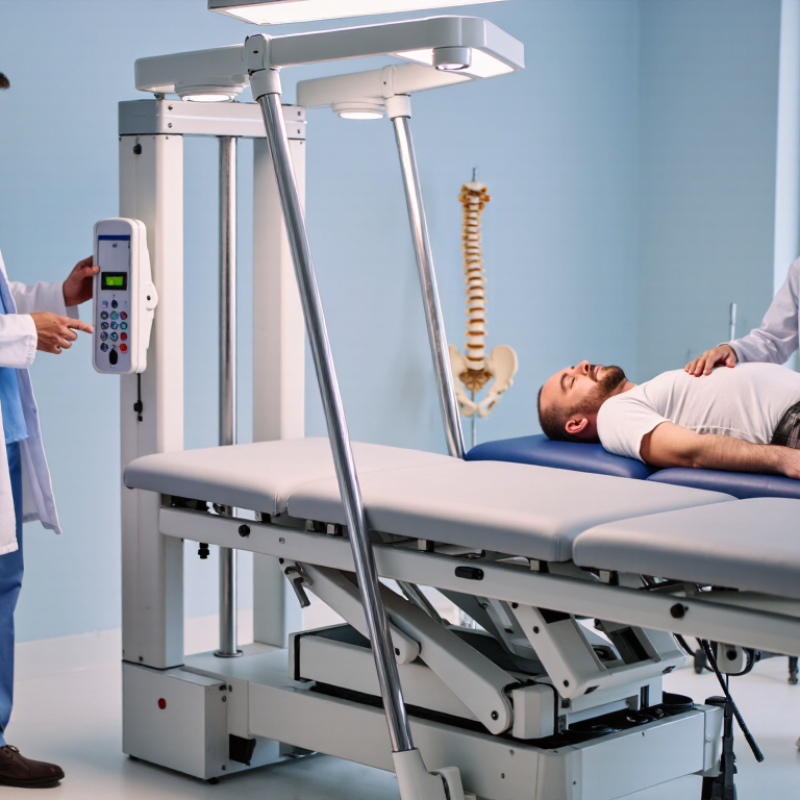
7 Tips for Choosing a Lumbar Traction Table

Define the Purpose and Scope of Lumbar Traction

Before comparing lumbar traction tables, define the clinical purpose clearly. A table for short-term symptom relief may differ from one used in rehabilitation programs. Identify the patient groups, treatment goals, session length, and expected traction force. Include patients with limited mobility, postoperative restrictions, or sensitivity to movement.

Ask whether the table supports supervised lumbar traction, positioning changes, and safe patient transfers. Its scope should match the clinician’s training and the facility’s procedures. A practical assessment includes weight limits, pelvic restraint, motor control, emergency release, and cleaning access. Small details matter.

Review the available evidence before choosing features. Traction should not replace a complete examination or individualized treatment plan. Screen for conditions that may make traction unsuitable, and document the reasoning behind each session. Clear records improve consistency between providers. They also expose weak assumptions.

Admittedly, a table can look technically impressive while serving the wrong purpose. That mismatch is easy to miss. Reassess the intended use with therapists, support staff, and patients. Their feedback may reveal awkward transfers, unclear controls, or discomfort that specifications cannot show. Reliability comes from testing the table in realistic clinical conditions, not from relying on marketing language.

Evaluate Patient Needs and Clinical Applications

Tip 1: Match the table to the patient’s presentation, not the diagnosis alone. Assess pain behavior, neurological signs, mobility, body size, and tolerance before choosing equipment. A patient with acute irritability may need gentle, adjustable traction and shorter sessions. Fit matters. Document the baseline pain score and movement limits.

Tip 2: Consider the clinical application carefully. A table used for chronic lumbar stiffness may require different positioning options than one used for radicular symptoms. Check pelvic restraint, angle adjustment, load control, and emergency release features. The patient should feel secure, not trapped. Explain every step and monitor discomfort during treatment. Small changes in hip position can alter the patient’s response.

Tip 3: Prioritize clinical judgment over impressive specifications. Review safety guidance, staff training requirements, cleaning procedures, and maintenance records. Screen for conditions that may make traction unsuitable, and refer for medical evaluation when findings are unclear. I have sometimes underestimated how strongly fear affects muscle guarding. That mistake can reduce treatment tolerance. Reassess symptoms after each session, record the response, and adjust the plan rather than repeating a routine automatically. A well-designed table cannot replace skilled assessment.

Compare Table Design, Traction Methods, and Adjustability

7 Tips for Choosing a Lumbar Traction Table

Low back pain affects about 619 million people worldwide, according to the World Health Organization’s 2023 fact sheet. That scale makes table selection a clinical decision, not a showroom preference. Start by checking the frame. A wide, stable base reduces movement when traction begins. A split table can improve pelvic control, while a solid surface may feel simpler and more comfortable.

Compare the traction method carefully. Static traction holds one force, while intermittent traction cycles pressure and release. Motorized systems may offer precise settings, but manual systems can provide useful tactile feedback. The 2021 JOSPT clinical practice guideline reported inconsistent benefits from mechanical traction for chronic low back pain with leg pain. Evidence is not perfect. Avoid promising outcomes from the machine alone. Check force range, ramp speed, treatment duration, and emergency release access. These details matter when a patient feels anxious or changes position.

Adjustability should fit real treatment rooms. Look for a height range that supports neutral clinician posture, plus adjustable pelvic and thoracic sections. Firm padding helps positioning, but excessive firmness can increase guarding. Test the table with different body sizes. Small gaps can feel large during a 20-minute session. Ask whether settings are easy to read and repeat. Keep a written treatment record. One overlooked issue is noise; a loud motor may reduce patient trust. WHO projects 843 million people may live with low back pain by 2050, so durable construction and serviceability deserve equal attention.

Check Safety Features, Comfort, and Ease of Use

When comparing a lumbar traction table, inspect safety before appearance. Look for an easy-to-reach emergency release, secure straps, and a clearly marked weight limit. Ask whether the table locks firmly during setup and returns smoothly after treatment. A trained clinician should verify these functions, not rely on photographs or sales claims. Read the care manual and confirm scheduled inspections. Small gaps can matter. Loose cables, cracked padding, or a drifting control may signal poor maintenance. Keep hands clear of moving joints. That detail is easy to miss. Also consider patient positioning. Can the head and leg sections adjust without forcing the back? Stable support helps the user relax rather than brace against movement. Clinical judgment remains essential, especially for people with spinal surgery, osteoporosis, or unexplained pain.

Comfort is not decoration; it affects cooperation and treatment quality. Test the padding for pressure at the hips, ribs, and ankles. A firm surface may support alignment, but excessive hardness can leave soreness afterward. Check strap width, fabric texture, and whether adjustments can be made without lifting the patient. Controls should be simple enough to operate while observing posture and breathing. An audible cue or visible position marker can reduce mistakes. Ask how quickly the table can be cleaned between users. Sealed surfaces and removable covers are practical advantages. I would still question any feature that looks impressive but complicates daily care. Ease of use includes transfers, storage, and staff training. If setup takes too long, rushed sessions become more likely. That is a design weakness, even when the table feels comfortable. Trial the table with a qualified professional, record the adjustments, and revisit them after several sessions.

7 Tips for Choosing a Lumbar Traction Table: Check Safety Features, Comfort, and Ease of Use
Tip Key Dimension What to Check Practical Benchmark Why It Matters
1 Prioritize Safety Controls Look for an accessible emergency-stop control, clearly labeled operating controls, controlled release of traction force, and a stable locking mechanism. The emergency stop should be reachable by both the clinician and the patient during treatment. Fast access to stopping or releasing traction can help reduce risk if discomfort, dizziness, or unexpected movement occurs.
2 Verify Weight Capacity and Stability Review the manufacturer’s stated patient weight limit, table dimensions, frame construction, caster locks, and resistance to rocking or shifting. The safe working load should exceed the intended patient’s weight and account for normal treatment movement. A stable table supports accurate positioning and helps prevent movement during traction sessions.
3 Evaluate Patient Comfort Assess cushion firmness, upholstery, surface width, head and leg support, and the availability of adjustable positioning components. The surface should support the patient without excessive pressure points and allow neutral, comfortable alignment. Comfort can improve patient relaxation and make it easier to complete the prescribed treatment time.
4 Check Traction Adjustability Confirm that traction force, treatment duration, ramp-up and ramp-down, and treatment position can be adjusted to clinical needs. Controls should permit gradual force changes rather than abrupt starts or stops. Adjustable settings allow the clinician to tailor treatment and respond to patient tolerance during a session.
5 Consider Ease of Use Inspect the control-panel layout, display readability, patient access, transfer height, setup steps, and ease of cleaning between users. Routine setup should be straightforward, with controls that can be understood without repeated reference to the manual. Simple operation can reduce setup errors, improve workflow, and leave more time for patient care.
6 Inspect Harnesses and Positioning Accessories Check the fit, adjustability, padding, fastening security, and cleaning requirements of pelvic, thoracic, and other support components. The harness should hold the patient securely without restricting normal breathing or creating concentrated pressure. Proper support helps maintain consistent positioning and improves comfort throughout treatment.
7 Review Documentation and Maintenance Ask for operating instructions, cleaning guidance, inspection intervals, service procedures, warranty terms, and replacement-part availability. Choose a table with clear documentation and a defined inspection schedule for cables, locks, padding, and moving parts. Good documentation supports safe operation, routine maintenance, staff training, and longer equipment service life.

Assess Quality, Maintenance, Cost, and Manufacturer Support

Choosing a lumbar traction table requires more than comparing advertised pull strength. Check seven details: structural quality, load ratings, actuator smoothness, maintenance access, total cost, support, and documentation. Inspect welds, upholstery seams, locking pins, and emergency controls in person. Ask for test records and applicable electrical-safety documentation. ISO 13485:2016 emphasizes controlled production and corrective-action processes, useful evidence of disciplined manufacturing. Do not confuse a polished showroom with reliable engineering. Small defects matter.

A table should move steadily, without jerks, noise, or unexplained heat. Request preventive-maintenance intervals, spare-part availability, calibration guidance, and technician response times. Calculate five-year cost, including installation, training, service visits, downtime, and consumables. ECRI’s 2024 Top 10 Health Technology Hazards stresses proactive risk management and clear device-use procedures. WHO reports that roughly one in ten patients experiences harm in healthcare, with more than half considered preventable (WHO, Patient Safety, 2023). That is not a traction-table failure rate, but it supports careful equipment controls. Ask how complaints are logged and resolved. Support often decides uptime. Cost estimates are rarely perfect; I would leave room for uncertainty. Trial the table with clinicians and patients, then record awkward transfers or difficult cleaning points. Readable manuals, local training, and a named service contact can matter as much as the frame. Before signing, compare warranty exclusions, response guarantees, software updates, and replacement lead times.

7 Tips for Choosing a Lumbar Traction Table

Suggested purchasing priorities for evaluating quality, maintenance, cost, and manufacturer support

The percentages represent a practical decision-weighting model rather than a brand ranking. Prioritize patient safety, clinical function, build quality, and long-term serviceability before comparing purchase price. Always verify load limits, warranty terms, replacement-part availability, cleaning requirements, and regulatory documentation in the supplier’s technical materials.