How to Choose the Best Jack Hammer for Your Project?
Choosing the best Jack Hammer begins with the material, work area, and daily workload. Concrete, asphalt, brick, and compacted soil each demand different impact energy. A demolition contractor may need a powerful pneumatic model for thick slabs. A homeowner repairing a small walkway may prefer a lighter electric unit. More power is not always better.
Dr. David Rempel, a recognized hand-tool ergonomics expert, emphasizes that “vibration exposure depends on intensity, duration, and frequency.” That warning deserves attention. A Jack Hammer can feel manageable during the first few minutes, then become tiring and difficult to control. Check the tool’s impact rate, joule rating, weight, noise level, vibration data, and compatible chisels. Also confirm whether your site supports an air compressor, generator, or reliable electrical supply.
Think about the operator, too. A narrow trench may require a compact body and pointed bit. A vertical wall may demand better balance and reduced weight. Dust control can matter more than raw impact force indoors. I once assumed the strongest tool would finish every job faster. That assumption was incomplete. Excessive power can damage fragile surfaces, increase fatigue, and create unnecessary cleanup.
The best choice balances performance, control, service support, and safety. Read the manufacturer’s instructions carefully. Inspect hoses, cords, retainers, and bits before use. Short breaks help, but they do not remove vibration risk. If specifications seem unclear, ask an authorized supplier for guidance. A reliable Jack Hammer should match the task—not merely look impressive in a catalog.
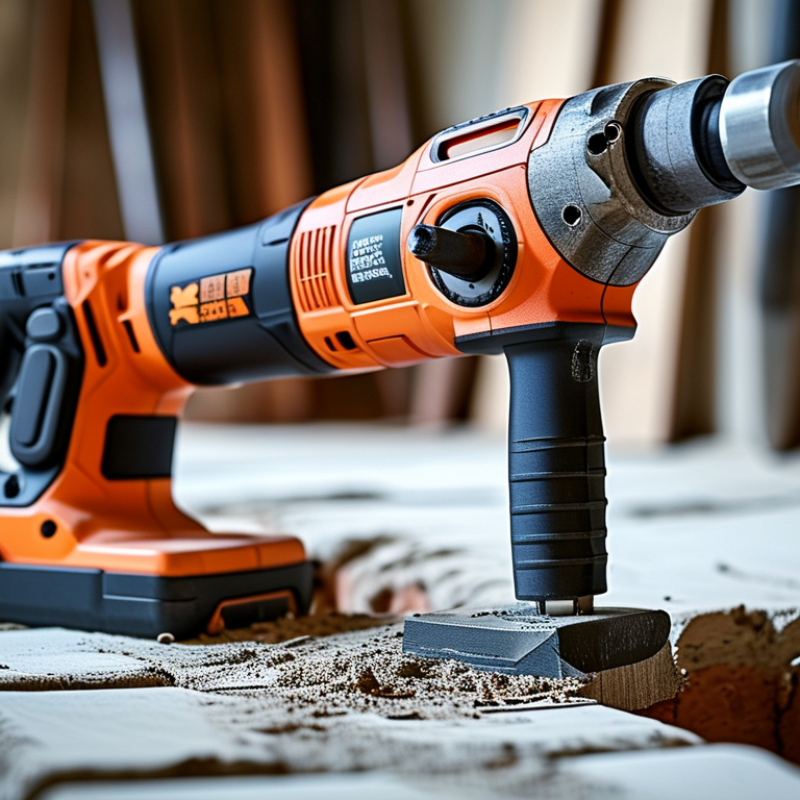
Understand Jack Hammer Types and Their Intended Applications
How to Choose the Best Jack Hammer for Your Project?
Jack hammer types serve different working conditions.
Electric models suit indoor renovation, light concrete removal, and small masonry repairs. They need a stable power supply and careful cable protection.
Pneumatic hammers deliver strong impact energy for roadwork, foundations, and thick concrete. They also require an air compressor, hoses, and enough airflow.
Hydraulic breakers fit excavators and skid steers. They are useful for large demolition, quarry work, and continuous outdoor production.
Match the tool to the material, not only its advertised power. A 30-kilogram pneumatic hammer can break hard concrete quickly, but it may fatigue the operator on vertical walls. A smaller electric model gives better control around pipes and fragile edges.
Choose point bits for penetrating cracks. Use chisels for controlled splitting and surface removal. This detail is often overlooked. The wrong bit wastes energy.
Safety data should influence the purchase. OSHA sets the respirable crystalline silica permissible exposure limit at 50 micrograms per cubic meter over eight hours. Dust extraction, wet methods, and suitable respiratory protection matter when breaking concrete.
EU-OSHA guidance identifies 2.5 m/s² A(8) as the hand-arm vibration action value and 5 m/s² as the exposure limit. Check the tool’s measured vibration rating and estimate daily trigger time.
Specifications can look convincing, yet real output changes with operator technique, bit wear, and compressor pressure. Leave room for that uncertainty. On a busy site, the best jack hammer is often the one workers can control safely for the full task.
Choose the Right Bit, Shank, and Material Compatibility
Choosing the best jack hammer starts with the work surface, not the machine’s appearance. A pointed bit concentrates force for breaking concrete and hard stone. A chisel bit cuts narrow channels or removes tile edges. A blunt bit helps crush brittle masonry into smaller pieces. Bit shape changes control, vibration, and removal speed. Do not guess. Test a small area before extended work.
The shank must match the hammer’s chuck system, diameter, and retaining method. A loose shank wastes impact energy and can damage the chuck. An oversized shank may not enter at all. Check the manufacturer’s dimensions carefully.
I once selected a bit by length alone. It fitted, but the collar sat poorly. The tool worked, yet vibration increased noticeably. That mistake changed how I inspect compatibility.
Material selection also deserves attention. Hardened steel suits repeated impact, while reinforced tips resist rapid wear in abrasive surfaces. For reinforced concrete, choose a bit designed for mixed materials rather than plain masonry. For asphalt, a wider cutting profile can improve removal and reduce unnecessary digging.
Match the bit to the hammer’s impact energy, operating weight, and duty cycle. Dust, heat, and long shifts affect wear too. A practical choice is rarely perfect. Recheck the bit after the first hour, and replace it when the tip rounds, chips, or stops transferring force efficiently.
Evaluate Weight, Handling, Vibration, and Operator Comfort
How to Choose the Best Jack Hammer for Your Project?
Weight affects control, but heavier does not always mean better. A compact hammer can reduce shoulder fatigue during wall chasing or overhead work. A heavier model may transfer less movement through the bit on dense concrete. The operator must still reposition it safely and often. Check the tool’s balance with both hands on the handles. A twisted wrist after five minutes is a warning, not a minor complaint. Handling improves when controls remain reachable without releasing the main grip. Consider bit access, hose routing, and whether the tool can stand securely between cuts.
Vibration deserves measurable attention. The UK Health and Safety Executive identifies 2.5 m/s² A(8) as the hand-arm vibration exposure action value and 5.0 m/s² as the limit value. Use the manufacturer’s declared vibration value, but treat it as an estimate. Material, pressure, bit condition, and technique can change real exposure. ISO 5349 also stresses that exposure depends on daily duration, not vibration alone. Noise matters for comfort too. NIOSH recommends limiting occupational noise exposure to 85 dBA over eight hours. A quieter hammer can reduce fatigue and improve communication. Test the tool with gloves and hearing protection. A short trial may reveal heat, awkward balance, or trigger stiffness that a specification sheet misses. No single rating settles the choice.
Compare Power Sources, Safety Features, and Maintenance Needs
Choosing a jack hammer starts with the power source, not the advertised impact rate. Electric models suit indoor renovation and short runs because they avoid compressor noise and air hoses. Pneumatic tools handle continuous concrete breaking, but they need a correctly sized compressor, clean air, and a dry-line filter. Hydraulic models deliver strong impact energy for excavators and remote work, although hose routing and oil contamination become serious maintenance concerns.
Safety deserves measurable checks. The European Directive 2002/44/EC sets an action value of 2.5 m/s² for daily hand-arm vibration exposure and a limit value of 5 m/s². Check the tool’s declared vibration value, then calculate trigger time. “Low vibration” alone proves little. NIOSH’s occupational noise criteria use 85 dBA over eight hours, with a 3 dB exchange rate. That makes hearing protection, shorter shifts, and quieter work zones practical requirements. Look for vibration-damping handles, a secure side handle, a lock-off control, and a trigger that releases instantly.
Maintenance needs match the jobsite. Electric units require cable, plug, switch, and brush inspection where applicable. Pneumatic units need daily oiling, hose checks, and compressor drainage. Hydraulic units demand clean couplings, leak checks, and scheduled fluid inspection. A useful mistake to avoid is choosing by impact force alone. I would compare actual trigger time, access space, dust, and operator strength. The cheapest option can become expensive when downtime starts. Keep a simple service log; memory is unreliable.
Sources: NIOSH, Occupational Noise Exposure Criteria Document; European Directive 2002/44/EC on vibration exposure.
How to Choose the Best Jack Hammer for Your Project?
Compare power sources, safety features, and maintenance needs before selecting a jack hammer.
Representative Impact Energy by Power Source
The figures below show typical mid-range impact energy values for commonly used jack hammers. Higher impact energy can improve demolition speed, but it may also increase vibration, noise, operator fatigue, and surface damage risk.
- Cordless battery: Convenient for light-to-medium work where mobility and low setup time are important.
- Corded electric: Suitable for indoor and general construction work when continuous power is available.
- Pneumatic: A strong choice for heavy-duty demolition when an air compressor and suitable hoses are available.
- Hydraulic: Designed for high-impact applications, often used with compatible construction machinery.
Safety and maintenance: Select a tool with vibration control, a secure auxiliary handle, overload protection, and an appropriate bit-retention system. Wear hearing, eye, hand, foot, and respiratory protection as required. Inspect bits, retainers, hoses, power cords, and lubrication points before use. Pneumatic and hydraulic tools also require clean, correctly pressurized fluid or air systems.