
Contact Us
China Top Bandage Manufacturer How to Choose a Supplier?
Choosing a reliable China Bandage Manufacturer requires more than comparing prices or reviewing polished catalogs. A dependable supplier should demonstrate consistent material quality, controlled production, and clear documentation. Buyers need to examine fabric composition, adhesive safety, absorbency, skin comfort, packaging, and shelf life. Samples should be tested under realistic conditions, including humidity, movement, and repeated application. A bandage that looks excellent on a sample card may perform poorly on a sweaty wrist.
Wound-care specialist Professor Keith Harding has stated, “Wound healing is a complex process, and successful care depends on evidence, assessment, and appropriate treatment.” This principle also guides supplier selection. A professional Bandage Manufacturer should explain its testing methods, quality standards, production capacity, and traceability procedures without hiding behind vague claims. Certifications such as ISO 13485 may support credibility, but certificates alone do not guarantee reliable daily production. Factory audits, batch records, complaint handling, and corrective actions reveal more.
Look closely.
Experience matters here. A supplier may offer attractive customization, yet struggle with stable adhesive strength after several production runs. Another may promise fast delivery, but lack backup material sources. These gaps are easy to miss during early discussions. Buyers should request recent test reports, inspect packaging lines, and ask how rejected products are controlled. It is also wise to compare communication quality before signing a contract. Some decisions will remain imperfect. No checklist can remove every risk. Still, careful verification can turn a hopeful purchase into a safer, more accountable supply partnership.
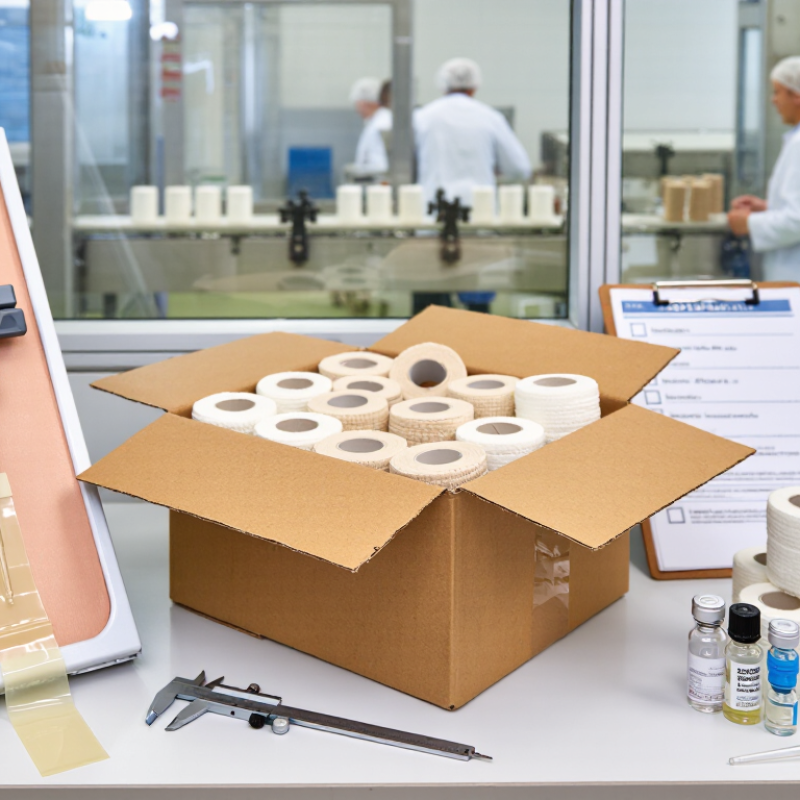
Define Your Bandage Requirements and Quality Standards
Choosing a China top bandage manufacturer starts with a clear product definition, not a low quotation. Identify the wound type, dressing size, absorbency, adhesion level, material, sterility, and intended use. Specify whether the bandage must suit fragile skin, movement, moisture, or frequent changes. Small details matter. A 5 cm pad cannot replace a 7 cm requirement.
Set measurable quality standards before contacting suppliers. Request material specifications, biocompatibility evidence, sterility validation, shelf-life data, lot traceability, and packaging integrity results. ISO 10993 is relevant for biological safety, while ISO 13485 supports a controlled medical-device quality system. The WHO Global Patient Safety Report 2024 states that one in ten patients experiences harm in healthcare, and more than half of this harm is preventable. That makes contamination control and reliable documentation practical priorities, not paperwork.
Ask for samples from several production lots, not one perfect sample. Test adhesion after movement, removal comfort, absorbency, and package opening. Also review certificates directly with the testing laboratory when possible. A factory audit should examine clean areas, inspection records, complaint handling, and corrective actions. Experienced buyers still miss weak adhesive performance because testing is done in dry, ideal conditions. Recheck performance with sweat, bending, and storage changes. A cheaper unit price may become expensive after rejects, delays, or inconsistent batches. Data from the Smithers medical-device packaging market report also highlights the growing importance of packaging performance and compliance in healthcare supply chains.
Research China-Based Bandage Manufacturers and Their Capabilities
Research China-based Bandage Manufacturers by examining capabilities, not only catalog prices. Request product specifications for adhesive strength, absorbency, backing material, and wound-contact safety. A capable supplier should explain testing methods clearly and provide recent reports from qualified laboratories. Ask whether production follows a documented quality system, such as ISO 13485, where relevant to your market.
Inspect the factory’s equipment and process controls. Look for clean production areas, controlled storage, sealed packaging lines, and batch traceability records. Confirm how workers manage raw-material inspections, in-process checks, and final sampling. Request samples from different production batches. One sample can look excellent. It proves little. Also review minimum order quantities, tooling needs, lead times, and packaging customization. A polished factory tour is not proof of consistent output.
Tips: Ask for a live production video or an independent factory audit. Compare sample results with written specifications. Check how the supplier handles complaints, corrective actions, and delayed shipments. Verify product registrations and labeling requirements for your destination market. Do not rely on certificates alone; confirm their scope, issuing body, and validity. Suppliers may answer slowly during busy seasons, so communication quality deserves a score. I would also record every promise in a purchase agreement, because informal assurances are easy to misunderstand.
| Supplier Capability Profile | Typical Product Scope | Material and Construction | Quality and Compliance Evidence | Production Capability | Typical Lead-Time Range | Best-Fit Buyer |
|---|---|---|---|---|---|---|
| Profile A Basic adhesive bandage specialist | Standard adhesive strips, fingertip and knuckle bandages, assorted-size packs. | Non-woven or fabric backing, pressure-sensitive adhesive, absorbent wound pad, release liner. | ISO 13485 quality-management certificate should be checked; biocompatibility and skin-irritation test reports should be available for the finished product. | High-volume converting, die-cutting, automatic packing, and standard-size customization. | Approximately 20–35 days after artwork and specifications are approved. | Retail, pharmacy, first-aid, hospitality, and general consumer-care programs. |
| Profile B Water-resistant bandage producer | Water-resistant strips, transparent film dressings, shower and sports-use bandages. | Polyurethane or polyethylene film, acrylic or rubber-based adhesive, low-lint absorbent pad. | Water-resistance test method, peel-adhesion data, sterilization status where applicable, and shelf-life evidence should be requested. | Film coating, slitting, rotary die-cutting, individual pouch sealing, and leak inspection. | Approximately 25–40 days for existing constructions; longer for new film and adhesive combinations. | Outdoor, sports, travel, healthcare retail, and private-label programs requiring moisture resistance. |
| Profile C Sensitive-skin product supplier | Hypoallergenic strips, low-trauma dressings, pediatric and sensitive-skin formats. | Soft non-woven or polyurethane backing, gentle acrylic or silicone-based adhesive, breathable wound pad. | Finished-product irritation and sensitization testing, adhesive residue evaluation, and documented change-control procedures. | Low-trauma adhesive coating, controlled lamination, clean handling, and custom adhesive selection. | Approximately 30–50 days, depending on adhesive qualification and testing requirements. | Baby-care, dermatology, elderly-care, hospital, and premium consumer-health channels. |
| Profile D Sterile wound-dressing manufacturer | Sterile adhesive dressings, postoperative covers, island dressings, and absorbent wound pads. | Medical non-woven or film backing, absorbent cellulose or rayon pad, wound-contact layer, sterile pouch. | Sterilization validation, packaging integrity testing, bioburden controls, ISO 13485, and applicable market registration documentation. | Controlled clean areas, pouch sealing, ethylene oxide or other validated sterilization route, and batch traceability. | Approximately 35–60 days, excluding regulatory review and sterilization validation for new products. | Hospitals, clinics, distributors, institutional procurement, and regulated medical-device markets. |
| Profile E Elastic fabric bandage producer | Elastic adhesive bandages, sports strips, joint-support strips, and flexible fabric formats. | Elastic textile backing, stretch adhesive layer, absorbent pad, and tear-resistant release liner. | Stretch recovery, tensile strength, peel adhesion, moisture vapor transmission, and skin-contact safety data should be verified. | Textile coating, elastic-web processing, continuous roll production, and automated roll or strip packaging. | Approximately 25–45 days for standard constructions and colors. | Sports retailers, industrial first-aid suppliers, outdoor brands, and workplace-safety distributors. |
| Profile F Custom printed bandage supplier | Printed character, promotional, children’s, event, and custom-shape bandages. | Printed non-woven or film backing, medical-grade adhesive, absorbent pad, and customized carton or pouch. | Ink migration and skin-contact safety assessment, colorfastness testing, artwork approval records, and packaging compliance. | Flexographic or digital printing, precision die-cutting, color control, and customized packing lines. | Approximately 30–50 days, depending on printing plates, packaging, and order quantity. | Promotional campaigns, children’s care, seasonal retail, and customized first-aid kits. |
| Profile G First-aid kit integrator | Bandage assortments, emergency kits, workplace kits, travel kits, and private-label first-aid sets. | Multiple bandage constructions combined with gauze, tape, wipes, gloves, scissors, and first-aid accessories. | Component certificates, lot traceability, kit bill-of-materials control, packaging verification, and product expiry management. | Kitting, counting, labeling, carton assembly, barcode application, and mixed-SKU fulfillment. | Approximately 20–45 days after all components and packaging are available. | Workplace safety, automotive, construction, schools, government procurement, and e-commerce. |
| Profile H Export-oriented regulated-device supplier | Adhesive wound dressings and bandages designed for multiple international markets. | A range of non-woven, film, fabric, foam, and absorbent constructions selected according to intended use. | ISO 13485 may support quality control; EU and United States requirements differ, and CE marking or FDA clearance should never be assumed without product-specific evidence. | Document-controlled production, supplier qualification, complaint handling, CAPA, batch records, and export documentation. | Approximately 40–75 days for new market-specific products or regulated packaging changes. | Importers, medical distributors, healthcare institutions, and buyers requiring documented regulatory support. |
| Evaluation note: Lead times and capabilities are typical planning ranges for China-based bandage supply projects, not guarantees. Before placing an order, request current certificates, product specifications, test reports, samples, factory-audit records, minimum order quantities, packaging details, and market-specific regulatory documentation. | ||||||
Evaluate Certifications, Materials, Production, and Quality Control
Choosing a top bandage manufacturer requires more than comparing prices. Check ISO 13485 certification, audit scope, certificate validity, and the actual production site. A certificate from an accredited body matters. Ask for recent audit findings, corrective-action records, and traceability samples. The World Health Organization reports that healthcare-associated infections affect about 7% of patients in high-income countries and 15% in low- and middle-income countries. Clean manufacturing controls are not optional.
Materials should match the wound and application. Request specifications for nonwoven fabric, adhesive, backing film, absorbent pad, and release paper. Test skin irritation, adhesion after sweating, package seal strength, and sterilization compatibility. Do not accept “medical grade” as sufficient evidence. In practice, low-cost adhesive can leave residue or fail during movement. That small failure matters.
Production capability also deserves direct verification. Review incoming-material checks, controlled environments, batch records, equipment calibration, and final inspection rates. Ask whether samples are retained for every lot. The FDA’s medical-device quality guidance emphasizes documented process control, complaint handling, and corrective action. These records reveal more than a factory tour. Independent laboratory testing can verify bioburden, sterility, tensile strength, and cytotoxicity, where applicable. I would also compare reported defect rates with customer complaints. A perfect number may deserve questions. Supplier evaluation is never finished after the first shipment; materials, operators, and processes can change.
How to Evaluate a China Bandage Supplier
Key international standards to verify when reviewing certifications, materials, production processes, and quality control.
A qualified supplier should provide valid certificates, technical files, test reports, traceability records, and quality-control evidence relevant to the product and destination market. The years shown represent the referenced edition years; always confirm the latest applicable revision and scope before approval.
Compare Pricing, Minimum Orders, Lead Times, and Customization
Choosing a China-based bandage supplier requires more than finding the lowest quotation.
Compare prices using the same specifications, including material, size, packaging, adhesive type, and testing requirements. A cheaper offer may exclude printing, inspection, or export packaging. Ask for a detailed cost breakdown.
Ask for evidence.
Minimum order quantities can vary widely between standard and customized products.
A factory may accept a small trial order for plain bandages but require more units for printed packaging or special shapes. Confirm whether the MOQ applies per size, design, or total order.
Small details matter.
Request samples before signing a long-term agreement, and check adhesion, softness, cutting accuracy, and package sealing in real use.
Lead times should include sample approval, material preparation, production, inspection, and shipping handover.
Written schedules are more reliable than general promises. Customization also needs careful control. Request artwork templates, color references, packaging proofs, and a written change-confirmation process.
In my sourcing experience, unclear approvals caused more delays than production itself. I once underestimated packaging review time; the product was ready, but the cartons were not. That mistake changed how I evaluate suppliers.
Check production capacity, quality records, relevant compliance documents, and communication speed before comparing the final price. A responsive supplier is not always the cheapest, but poor communication can become expensive.
Verify Samples, Communication, Compliance, and Long-Term Reliability
Choosing a top bandage manufacturer requires more than a competitive quotation. Request production samples from different batches, not only one attractive prototype. Check adhesive strength, absorbency, edge sealing, packaging clarity, and skin comfort after several hours. Record the test conditions. Small details matter.
Communication reveals operational maturity. Ask for a written specification, response timeline, material declaration, and change-notification procedure. Questions should reach technical staff, not only sales representatives. Keep approved samples and signed specifications together. In my experience, unclear email replies often become expensive production disputes. That lesson is easy to underestimate.
Compliance must be verified with current certificates, test reports, traceability records, and factory audit evidence. ISO 13485 is a useful quality-system reference, but a certificate alone proves little. The CDC’s National and State Healthcare-Associated Infection Progress Report notes that about one in 31 U.S. hospital patients has an associated infection on any given day. This makes clean production, controlled packaging, and reliable documentation commercially important. The WHO Global Report on Infection Prevention and Control reports healthcare-associated infections affecting roughly 7% of patients in high-income countries and 15% in low- and middle-income countries. Supplier reviews should therefore examine hygiene controls, complaint handling, batch records, and corrective actions. Request recent evidence, not promises. Long-term reliability also depends on capacity planning, backup materials, delivery history, and transparent handling of defects. No supplier is perfect. A thoughtful buyer checks how honestly problems are reported.