
Contact Us
How to Choose the Best Frosted Glass Front Door?
Choosing the best Frosted Glass Front Door requires more than comparing attractive patterns. The right choice must balance privacy, daylight, security, insulation, maintenance, and local weather. A soft acid-etched panel may blur a hallway beautifully, while a heavily textured panel can hide fingerprints and street activity more effectively. These differences matter when sunlight moves across the entryway each afternoon.
Professional performance data should guide the decision. The U.S. Department of Energy explains that low-emissivity coatings can reduce heat transfer through glazed assemblies. Its Building America resources also emphasize proper installation, air sealing, and water management around exterior doors. A high-quality slab can still perform poorly if the frame leaks during heavy rain. The National Fenestration Rating Council provides standardized labels for ratings such as U-factor and solar heat gain coefficient. These figures help homeowners compare products more reliably than appearance alone.
Security deserves equal attention. Look for laminated or impact-rated glass where appropriate, multi-point locking options, reinforced frames, and hinges protected from tampering. Local building requirements and climate exposure should influence the specification. A south-facing entrance may need stronger solar control than a shaded porch.
There is no perfect door.
My own practical preference is a balanced design: translucent glass at eye level, a durable insulated frame, and a clearly documented warranty. Still, “frosted” does not always mean private at night. Interior lighting can reveal silhouettes. That small detail is easy to overlook. This guide will examine glass types, energy ratings, security features, installation quality, costs, and long-term care before recommending a final configuration.
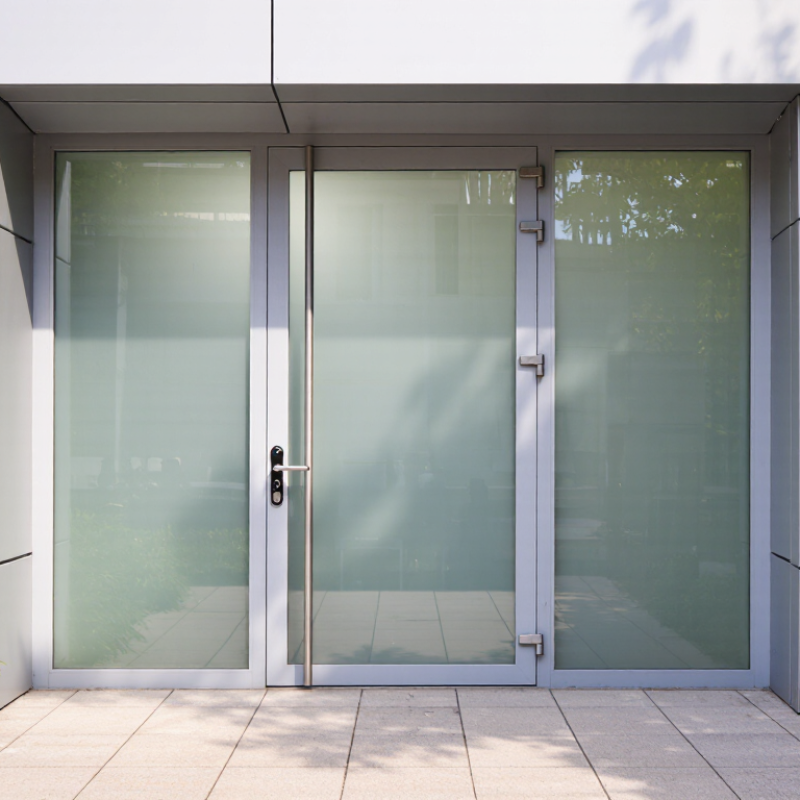
Understanding Frosted Glass Front Door Types and Privacy Levels
How to Choose the Best Frosted Glass Front Door?
Frosted glass is not one privacy category. Acid-etched glass has a smooth, consistent haze and usually suits modern entry doors. Sandblasted glass feels softer, but fingerprints and uneven cleaning can become visible. Patterned or textured glass obscures shapes more strongly. Laminated frosted glass adds a privacy film between two glass layers. It can also improve sound control and safety performance.
Privacy depends on more than the surface finish. A light-frosted panel may hide facial details during daylight, yet reveal movement at night. Strong interior lighting creates this problem. A dense finish can show only shadows, while a heavily patterned panel may block useful daylight. Test a sample at both times. Stand two metres away. Turn the hallway lights on. This simple check is often missed.
The U.S. Department of Energy reports that windows can represent about 25% to 30% of residential heating and cooling energy use, so glass selection should include thermal performance, not privacy alone. Look for insulated glazing, low-emissivity coatings, and a verified U-factor. The International Energy Agency’s 2024 Energy Efficiency report places buildings at roughly 30% of global final energy consumption. That context matters for frequently used entrances. My practical preference is medium-to-high privacy with daylight transmission, but every hallway behaves differently. Frosted glass is not automatically private. Always review the manufacturer’s visible-light and privacy specifications.
Comparing Glass Designs, Materials, and Security Features
How to Choose the Best Frosted Glass Front Door?
Frosted glass designs balance daylight and privacy, but patterns change performance. Acid-etched glass gives a smooth, permanent haze. Sandblasted glass offers deeper texture, though fingerprints collect easily. Ceramic-frit patterns can create sharper shapes and stronger visual screening. DOE reports that windows can account for 25–30% of household heating and cooling energy use. Therefore, choose double glazing, low-emissivity coatings, and insulated frames. A beautiful door can still feel cold around its edges.
Material selection matters. Fiberglass resists moisture and usually needs less maintenance than timber. Timber feels warmer and can be repaired, but it demands careful sealing. Steel provides a rigid door leaf, yet exposed edges may rust in wet climates. NFRC certification helps compare U-factor and solar heat-gain values under consistent testing. Look for a lower U-factor in cold regions. This is not a perfect rule. Shading and installation can change real results.
Security depends on the whole assembly, not frosted glass alone. Laminated glass holds together after cracking, unlike ordinary annealed glass. Ask for tested glazing and frame performance, such as resistance classifications under ASTM or EN 356 methods. Use a multi-point lock, reinforced strike area, and long structural screws. Frosting hides interior details, but it does not stop forced entry. I would inspect the corner seals, hinge fasteners, and threshold before choosing a pattern. Small gaps matter. According to the FBI’s 2023 Crime Data Explorer, burglary remains a significant property-crime category, so privacy should never replace physical security.
How to Choose the Best Frosted Glass Front Door?
Compare common frosted-glass designs by typical visible light transmission and glass thickness. Higher light transmission brings more daylight, while thicker laminated constructions generally provide a stronger security option.
How to read the chart: The figures represent typical midpoints from commonly specified glass ranges, so exact performance varies by pattern, coating, thickness, and manufacturer. For exterior doors, tempered glass is safety glass that breaks into small granules, while laminated glass holds together after impact and can delay forced entry. Pair the glazing with a reinforced frame, multipoint lock, and properly fitted hardware.
Evaluating Energy Efficiency, Durability, and Weather Resistance
How to Choose the Best Frosted Glass Front Door?
Evaluating Energy Efficiency, Durability, and Weather Resistance
A frosted glass front door should protect your hallway from heat loss, wind, and driving rain. In my experience, the glass specification matters more than the decorative pattern. Choose insulated double glazing with a low-emissivity coating and warm-edge spacers. These features help reduce cold spots around the glass. Check the whole-door U-value, not only the center-glass rating. A beautiful panel can still perform poorly if its frame leaks air.
Durability depends on more than thick glass. Tempered or laminated safety glass handles daily impacts better than ordinary glass. Examine the hinges, threshold, seals, and locking points closely. A sturdy door should close evenly without forcing the handle. Ask for independent testing against air leakage, water penetration, and wind pressure. Look for documented performance standards. Marketing language alone is weak evidence.
Weather resistance becomes visible during installation and maintenance. The sill should direct water away from the interior, while continuous gaskets must meet tightly at the corners. Coastal homes may need corrosion-resistant hardware and more frequent cleaning. Frosted surfaces can hide fingerprints, but they do not hide poor sealing. Test the door after heavy rain and on a cold morning. If you feel a draft, investigate it. I once overlooked a small threshold gap, and the room stayed noticeably colder. That mistake changed how I assess every door.
Matching Door Style, Size, and Hardware to Your Home
Choosing the best frosted glass front door starts with proportion, not decoration. Match the door style to your home’s architecture. Slim vertical glass suits modern façades, while divided panes support traditional designs. Frosted glass softens direct views but still brings useful daylight inside.
Measure the rough opening, jamb depth, threshold height, and swing clearance. Do not trust an old invoice. Buildings settle, and small differences can cause expensive fitting problems. The U.S. Department of Energy reports that windows account for about 25–30% of residential heating and cooling energy use. Although a door is smaller, its glass and frame still affect comfort. Compare NFRC-listed U-factor and solar heat gain coefficient ratings before ordering.
Tips: Use a paper template to test the handle position and swing path. Lever handles are easier to operate with full hands, while a long pull handle creates a stronger contemporary look. Choose finishes that suit nearby lighting, railings, and house numbers. A dark finish may look elegant, but it can show fingerprints and heat quickly. I would also question overly decorative hardware. It can distract from the frosted pattern and make future repairs harder. A weather-resistant lock, adjustable hinges, and a properly sealed threshold matter more than a fashionable detail.
How to Choose the Best Frosted Glass Front Door? - Matching Door Style, Size, and Hardware to Your Home
| Door Style | Recommended Glass Treatment | Typical Door Size | Best Home and Entryway | Privacy Level | Suitable Hardware | Important Selection Considerations |
|---|---|---|---|---|---|---|
| Full-Glass Contemporary Door | Acid-etched glass Uniform frosted glass | Single door: approximately 810–915 mm wide × 1980–2135 mm high | Modern homes, compact porches, and entryways that need more natural light | Medium to high, depending on the opacity and texture | Long pull handle, lever lockset, concealed closer, and matching deadbolt | Use a more opaque finish when the door faces a sidewalk or a neighboring property. Confirm that the frame and wall can support the selected glass panel. |
| Half-Glass Panel Door | Upper frosted panel Clear or patterned lower panel | Single door: approximately 810–915 mm wide × 1980–2135 mm high | Traditional, transitional, and family homes requiring a balance of light and privacy | Medium; higher when the upper panel uses an opaque pattern | Lever handle, round knob, deadbolt, and optional door knocker | The solid lower section can improve impact resistance and helps conceal activity near the floor. Choose safety glazing for glazed areas in doors. |
| Single Door with Sidelight | Frosted sidelight Partially frosted main panel | Main door: approximately 810–915 mm wide; overall unit width varies with sidelight size | Dark or narrow foyers that benefit from additional daylight | High when the sidelight is fully frosted | Lever lockset, deadbolt, narrow-profile pull, and coordinated trim | Measure the complete rough opening, including the door, frame, threshold, and sidelight. Frosted sidelights protect privacy without eliminating daylight. |
| Double Entry Door | Frosted center panels Decorative textured glass | Combined width: approximately 1525–1830 mm × 1980–2135 mm high | Wide façades, formal entrances, and homes with a generous foyer | Medium to high, based on glass coverage and finish | Multipoint lock, flush bolts on the inactive leaf, pull handles, and door coordinator | Double doors require accurate alignment and sufficient structural support. The inactive leaf should be secured at the head and sill when closed. |
| Arched or Decorative-Top Door | Custom frosted insert Textured or patterned glass | Custom dimensions; common single-door widths remain approximately 810–915 mm | Period-style, Mediterranean, craftsman, and distinctive custom façades | Medium to high, depending on the pattern and viewing angle | Decorative lever, escutcheon, pull handle, and finish-coordinated hinges | Non-rectangular glass and frames usually require custom fabrication. Confirm the final template before ordering hardware or trim. |
| Minimalist Flush Door | Narrow frosted vision panel Vertical privacy glass | Single door: approximately 810–915 mm wide × 1980–2135 mm high | Contemporary homes with clean lines and limited exterior decoration | High when the glass panel is narrow and heavily frosted | Linear pull handle, square lever, concealed hinges, and low-profile deadbolt | Choose hardware with simple geometry and verify the backset, door thickness, and clearance from the glass cutout. |
| Wood or Wood-Look Door with Glass Insert | Small frosted insert Beveled or textured privacy glass | Single door: approximately 810–915 mm wide × 1980–2135 mm high | Craftsman, cottage, farmhouse, and transitional exteriors | Medium to high | Black, bronze, brass, or stainless-steel lever set with a matching deadbolt | Coordinate the hardware with the exterior light fixtures and house numbers. Wood doors need suitable weather protection and periodic maintenance. |
| Accessible or High-Traffic Entry Door | Small frosted viewing panel Laminated safety glass | Clear opening should be planned around local accessibility requirements; a wider leaf may improve passage | Busy households, rental properties, and entrances used with carts or mobility equipment | Medium to high | Lever handle, low-force closer, wide pull handle, and durable multipoint or deadbolt system | Avoid knobs when ease of operation is important. Confirm local code requirements for clear width, threshold height, safety glazing, and opening force. |
Checking Installation Needs, Maintenance, and Overall Cost
Choosing the best frosted glass front door starts with the opening, not the pattern. Measure width, height, wall thickness, and threshold depth before ordering. A door that looks perfect may fail if the frame does not match the wall. Ask a qualified installer to check swing clearance, drainage, structural support, and local safety requirements. Tempered or laminated safety glass is often appropriate, but the exact specification depends on the entrance design. Do not guess here. A site visit can reveal uneven floors or hidden moisture that photographs miss.
Installation costs include labor, removal, trim repairs, hardware adjustments, and disposal. Get an itemized quote, and ask what happens if the opening needs correction. I have seen small measurement errors create expensive delays. That detail is easy to underestimate. Compare total performance, not only the purchase price. A well-sealed frame can reduce drafts, while poor seals may increase heating or cooling use. Check the glass insulation rating, warranty terms, and replacement process. The cheapest option is not always economical.
Maintenance should fit your routine. Use a soft cloth, mild soap, and clean water on the glass. Avoid abrasive pads, harsh solvents, and metal scrapers, which can damage coatings or hardware. Inspect seals, hinges, locks, and the lower threshold every few months. Wipe standing water after heavy rain. Frosted surfaces hide fingerprints well, but they still show dust near the handle. I would also test privacy at night, with interior lights switched on. Some textures obscure faces but still reveal movement. That is a detail many buyers only notice after installation.