China Best Paper Takeaway Containers Supplier?
Choosing a China supplier for Paper Takeaway Containers is not just a price comparison. Buyers need to assess material quality, production consistency, food-contact documentation, and delivery capability. A low quotation can look attractive. But thin walls, loose seams, or lids that do not fit can create costly problems after shipment.
The China Paper Association’s 2023 industry statistics reported paper and paperboard production of 127.05 million tonnes. This figure describes the wider paper sector, not takeaway packaging alone. Still, it shows the scale of China’s paper supply base. Scale matters, but it does not guarantee reliable containers. Ask suppliers for product specifications, sample results, and clear details about coatings, dimensions, and packing methods. Check whether test documents match the exact product being quoted.
This guide explores how to compare Chinese manufacturers using practical, verifiable criteria. It considers factory experience, customization, quality checks, export communication, and the consistency of repeat orders. A sample can be useful. A production run is the real test. Buyers should also confirm what a supplier means by “paper,” since barriers and coatings can affect performance and end-of-life handling. No supplier is perfect, and paperwork alone cannot prove every claim. Treat unusually broad promises with care. The best choice is usually the manufacturer that answers specific questions clearly, supports claims with relevant records, and delivers containers suited to the food, route, and service conditions.
What Are Paper Takeaway Containers?
What Are Paper Takeaway Containers?
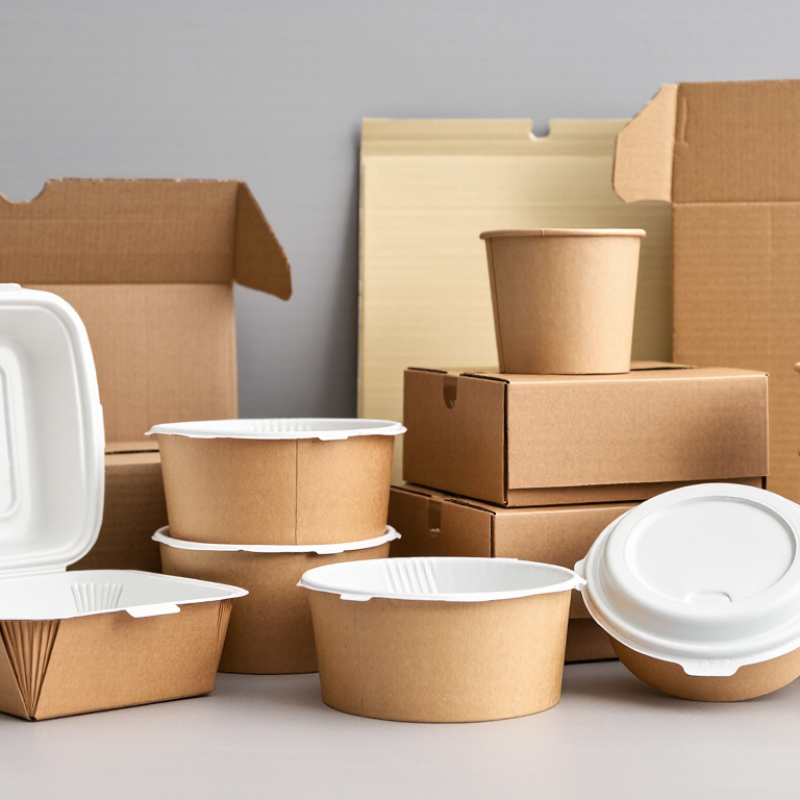
Paper takeaway containers are disposable food-service packages made mainly from paperboard, kraft paper, or molded fiber. They hold meals such as noodles, salads, pastries, and fried foods. Folded seams and fitted lids help keep food contained during transport. They are not always paper only. Many have a thin barrier coating to resist oil, moisture, or heat. That layer can affect recyclability and compostability, so material details matter.
The US Environmental Protection Agency’s 2018 Advancing Sustainable Materials Management report estimated an 80.9% recycling rate for paper and paperboard containers and packaging. This figure covers a broad US category; it does not mean every takeaway box is accepted locally. Check the package construction and local collection guidance. A box may feel sturdy but soften under hot soup. Details matter. When assessing a container, ask about board weight, barrier type, food-contact documentation, and tests using the intended menu. These checks are not perfect: delivery time, steam, and stacking can reveal weaknesses that a short laboratory test misses.
What Types of Paper Takeaway Containers Are Available?
Paper takeaway containers come in several practical forms. Folding-paperboard boxes suit sandwiches, pastries, and dry meals. Their broad lids protect food, but thin board can soften when steam collects inside. Paperboard bowls and soup tubs handle sauced dishes better, especially when paired with fitted lids. Check the lining and rim design before filling them with hot liquids.
Molded-fiber clamshells and trays offer a textured, rigid shape for fried foods and combo meals. Grease-resistant wraps and sleeves work well for burgers, wraps, and baked goods. They use less space, but they are not a substitute for a leak-resistant bowl. That matters. The U.S. Environmental Protection Agency reported that 68.2% of paper and paperboard was recycled in 2018, in its Advancing Sustainable Materials Management report. That broad figure does not mean every food-soiled or coated takeaway container can be recycled locally. A container’s real performance depends on its food, heat, holding time, and disposal route. It is easy to focus on the material name and miss the details. A lid that fits poorly can undo an otherwise sensible choice.
How Are Paper Takeaway Containers Made and Tested in China?
China Best Paper Takeaway Containers Supplier?
How Are Paper Takeaway Containers Made and Tested in China?
Paper takeaway containers begin with food-contact paperboard. In Chinese factories, workers or automated lines print and coat the sheets, then die-cut and fold them into boxes, bowls, or trays. Seams are bonded with heat or approved adhesives. The FAO’s 2022 Forest Products Statistics reports about 417 million tonnes of paper and paperboard production worldwide, showing the scale of the material supply chain. But volume alone says little about a container’s quality.
Factories typically check dimensions, seam strength, compression, and resistance to hot liquids or oil. A sample may hold soup during a brief test, yet leak after a long delivery ride. That gap matters. Testing should reflect the food, temperature, and transport time the container will actually face. China’s GB 4806.8-2022 sets safety requirements for food-contact paper and board; suitable laboratory testing can help verify compliance and screen for harmful substances. Ask suppliers for recent test reports tied to the exact product and coating.
Tips: Request samples, fill them with the intended food, and check for leaks after 30 minutes. Confirm that the test report matches the container’s material and intended use. A neat-looking seam is not proof of a reliable seal.
What Qualities Define a Reliable Chinese Supplier?
A reliable Chinese paper takeaway-container supplier proves consistency with records, not polished sales claims. Ask for food-contact declarations, pulp traceability, and test reports for the exact bowl, lid, and coating. The OECD’s 2022 Global Plastics Outlook reports that packaging generated 40% of global plastic waste in 2019. That figure does not make paper impact-free. It makes material claims worth checking.
Request recent batch records for basis weight, leak resistance, heat tolerance, and dimensional fit. Test production samples with hot, oily food over the expected delivery window; a neat sample can hide weak seams. The FAO reported about 401 million tonnes of global paper and paperboard production in 2022. In that vast supply chain, fiber origin and recycled content need clear documentation. Ask who runs tests, how often, and what happens when a batch fails.
Inspect the converting line, calibration logs, cleanliness, and carton storage, in person or by video. Compare approved samples with packed goods. Confirm lead times, defect limits, replacement terms, and export documents in writing. A certificate alone is not enough. I would also ask whether an uncoated or lower-barrier option suits the menu. Coatings can complicate recovery, and the best choice depends on local collection systems. Supplier reliability shows in traceable details, not promises.
China Best Paper Takeaway Containers Supplier? What Qualities Define a Reliable Supplier?
Typical paper basis-weight ranges for common food-packaging formats (g/m²)
These are indicative commercial ranges, not regulatory limits; actual specifications vary by design and intended use. A reliable supplier should provide food-contact documentation, traceable batch records, and relevant test reports—not just a basis-weight figure.
How Can Buyers Compare Chinese Paper Container Suppliers?
Comparing Chinese paper container suppliers starts with a clear specification, not a catalogue photo. Ask each supplier for the same container size, paper weight, rim diameter, and lid fit. Then test samples with your actual food and serving conditions. Fill a bowl with hot soup, wait 20 minutes, and check for soft spots, seepage, or a loose lid. Small details matter.
Request written information on material composition, coatings, printing options, minimum order quantity, production lead time, and quality checks. Ask for relevant food-contact test reports, and confirm that the documents match the material and product you plan to order. A polished sample alone cannot show how every production run will perform. Check whether the supplier can explain its inspection process and how it handles defects. Specific answers are useful.
Compare the full delivered cost, including packaging, freight, and any tooling charges, rather than choosing by unit price alone. Review how quickly the supplier answers technical questions and whether quotations state the same specifications. A simple scorecard can help. It is not perfect; sample results may vary with storage, filling temperature, and handling. Record those conditions, and repeat the test when a detail changes.