
Contact Us
10 Best Bispecific Antibody Manufacturers in 2026?
Developing a reliable Bispecific antibody requires more than advanced molecular design. It demands consistent cell-line development, controlled manufacturing, and dependable analytical testing. In 2026, manufacturers face rising expectations from researchers, biopharmaceutical companies, and clinical teams.
This guide examines ten leading Bispecific antibody manufacturers and the capabilities that distinguish them. The evaluation considers discovery support, antibody engineering, process development, GMP production, quality systems, and commercial scalability. It also reviews experience with complex formats, including asymmetric structures, dual-target binding, and difficult-to-express candidates. Practical details matter, such as batch consistency, documentation quality, technical communication, and the ability to move from a small laboratory sample to larger clinical batches.
No ranking is perfect.
A company may excel in early discovery but lack commercial capacity. Another may offer strong production infrastructure while providing limited flexibility for unusual designs. These differences can influence project timelines, costs, and development risk. Therefore, the list should serve as a research starting point rather than a final purchasing decision. Readers should verify certifications, current facilities, regulatory history, published capabilities, and service terms directly with each manufacturer. Facilities and partnerships can change during the year. That uncertainty deserves attention.
The following overview presents a balanced comparison based on technical expertise, manufacturing reliability, industry experience, and publicly available evidence. It aims to help decision-makers identify suitable partners for research programs, preclinical development, and clinical manufacturing. Careful due diligence remains essential.
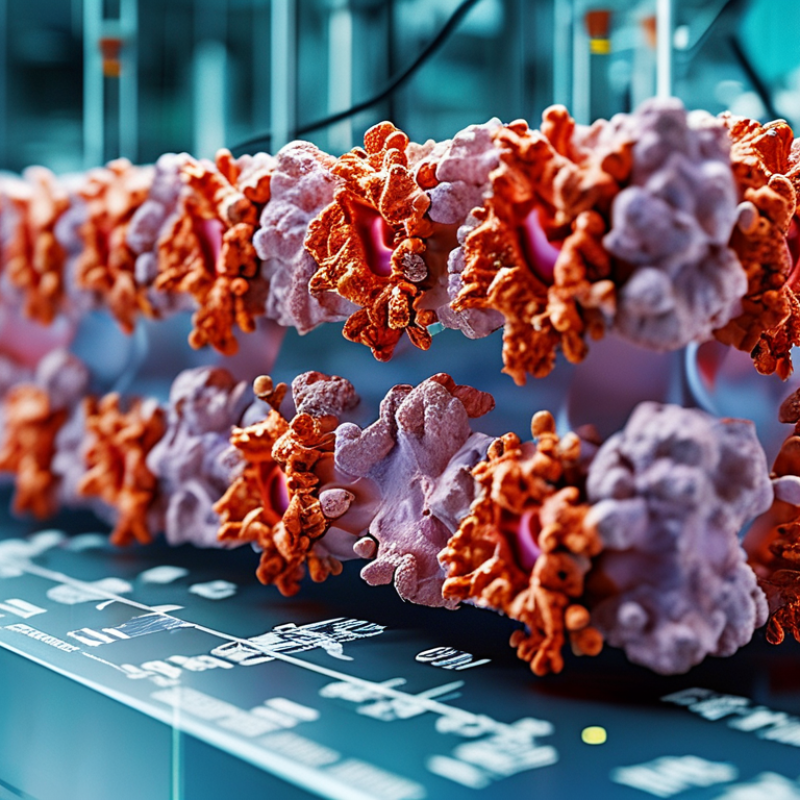
Bispecific Antibodies: Definition, Design, and Clinical Applications
Bispecific antibodies bind two different targets with one engineered molecule. This design can connect an immune cell with a cancer cell, or block two disease pathways simultaneously. Their architecture may use two full antibody arms, a smaller fragment format, or conditional activation. Each choice changes stability, tissue penetration, manufacturing difficulty, and dosing frequency. Small details matter. A hinge can influence exposure.
Clinical applications are expanding beyond oncology. Researchers are studying bispecifics for autoimmune, infectious, and hematological diseases.
In oncology, the mechanism is direct and visual: one binding site recognizes a tumor marker, while the other recruits T cells.
The approach can produce strong responses, but cytokine release syndrome and neurological effects require careful monitoring. These risks are manageable in experienced clinical settings, yet they should not be minimized.
Industry investment reflects this momentum. The 2024 MarketsandMarkets Bispecific Antibodies Market report forecasts a double-digit compound annual growth rate through 2029. IQVIA’s Global Oncology Trends 2024 report also describes sustained growth in oncology research and targeted therapies. Such figures support optimism, not certainty.
Development failures still occur because immune activation, pharmacokinetics, and tumor heterogeneity interact unpredictably. In my view, the field needs better head-to-head evidence, not only more candidates. A promising molecule can still disappoint when real-world dosing becomes complicated.
How to Evaluate Bispecific Antibody Manufacturers
Choosing a bispecific antibody manufacturer requires more than comparing quoted production capacity. Evaluate experience with difficult formats, including asymmetric structures and Fc modifications. The Antibody Society’s therapeutic antibody database reported more than a dozen approved bispecific antibodies globally by 2024. That progress raises the standard for technical selection. Ask for evidence covering expression yield, aggregation control, potency, and lot-to-lot consistency. A polished presentation is not enough.
Manufacturing quality depends on development depth. Review the company’s cell-line platform, analytical assays, scale-up history, and formulation capabilities. IQVIA Institute’s Global Trends in R&D 2024 highlighted continued growth in complex biologic development. This growth increases demand for reliable process characterization and specialized testing. Request representative batch data, stability results, deviation summaries, and clear technology-transfer timelines. Confidentiality may limit access, but vague answers deserve attention. I would not judge a supplier by speed alone.
Tips: Build a weighted scorecard before contacting manufacturers. Give separate scores for molecule experience, quality systems, regulatory readiness, capacity, and communication. Confirm whether critical assays are performed internally or outsourced. Check cold-chain procedures with a practical question: how is a temperature excursion documented and investigated? Also examine contingency planning for raw materials and single-use components. One weakness can affect the entire program. Our own assumptions may still be incomplete, so reassess the shortlist after technical due diligence.
The 10 Best Bispecific Antibody Manufacturers in 2026
The 10 Best Bispecific Antibody Manufacturers in 2026 should be judged by evidence, not advertising. Strong candidates combine antibody engineering, stable cell lines, scalable GMP production, and reliable analytical testing. They should also demonstrate experience with complex quality attributes, including purity, aggregation, potency, and product consistency. Manufacturing capacity alone is not enough.
IQVIA Institute’s Global Trends in R&D 2024 reported that oncology represented about 41% of the global clinical pipeline. This supports continued demand for dual-target antibody platforms, especially in immune-oncology and hematology. Industry assessments also show that biologics development is becoming more expensive and operationally demanding. Therefore, the best manufacturers should offer process development, comparability studies, cold-chain control, and regulatory documentation. A perfect ranking is impossible. Public data differs widely between suppliers, and some claims remain difficult to verify.
Tips: Check inspection history, batch-release timelines, and independent quality certifications. Ask for evidence from comparable molecules, not generic capacity figures. Review assay development early. Small analytical gaps can become costly delays. Buyers should also test communication during technical discussions. It often reveals more than a polished presentation.
10 Best Bispecific Antibody Manufacturers in 2026
The chart presents a practical, non-company-specific benchmark for evaluating bispecific antibody manufacturers. The criteria reflect widely used biopharmaceutical development and manufacturing priorities, with a combined weighting of 100%.
Higher-weighted dimensions generally have a stronger influence on supplier selection, including regulatory compliance, analytical characterization, process scalability, and clinical-grade manufacturing readiness. The scores are an editorial evaluation framework rather than company-specific performance data.
Technology Platforms and Product Development Capabilities
10 Best Bispecific Antibody Manufacturers in 2026?
Technology Platforms and Product Development Capabilities
The strongest bispecific antibody manufacturers combine flexible molecular design with disciplined development workflows. Their platforms may support asymmetric antibodies, dual-variable domains, or fragment-based formats. Each design affects stability, potency, half-life, and manufacturing complexity. No platform wins every time.
A capable manufacturer should show more than attractive discovery data. It should explain target biology, binding geometry, cellular assays, and developability risks. Reliable teams test aggregation, charge variants, thermal stability, and nonspecific binding early. They also use orthogonal analytical methods to confirm identity and purity. Small details matter here. A weak assay can distort an entire candidate ranking.
Product development capability separates experienced organizations from contract laboratories with limited scale. Strong partners connect lead selection, cell-line development, upstream processing, purification, formulation, and quality control. They can adapt processes when viscosity, low expression, or product heterogeneity appears. Those problems are common. Manufacturing readiness should include reproducible batch records, qualified analytical methods, and clear technology-transfer packages. Regulatory documentation must remain traceable and scientifically justified.
When comparing ten leading manufacturers in 2026, buyers should examine platform breadth, evidence quality, and communication during difficult experiments. Ask for representative timelines, process recovery data, and stability results. Confidentiality restrictions may limit disclosure, so comparisons are rarely perfect. Still, transparent explanations usually reveal more than polished presentations. A promising platform can fail without strong execution.
Manufacturing Quality, Capacity, and Regulatory Readiness
10 Best Bispecific Antibody Manufacturers in 2026?
Manufacturing Quality, Capacity, and Regulatory Readiness
The strongest bispecific antibody manufacturers combine disciplined science with repeatable production. Quality begins with cell-line development, process control, and well-defined critical quality attributes. Their facilities should manage molecular complexity, including mispairing, aggregation, and potency variation. These risks can appear quietly between development batches.
Capacity matters beyond headline volume. A credible manufacturer can support laboratory material, clinical batches, and later commercial demand without disrupting process consistency. Look for flexible single-use systems, qualified equipment, trained operators, and documented scale-up experience. A full production suite is not enough. Scheduling, raw-material security, and analytical throughput also shape delivery reliability.
Regulatory readiness should be visible in the records. Strong teams maintain complete batch documentation, validated analytical methods, stability data, and traceable deviation investigations. They prepare for agency questions before submission, not after. Inspection history can offer useful evidence, but it never replaces current technical review. No scorecard is perfect. A facility may have excellent equipment yet weak communication during a deviation. Another may show modest capacity but stronger hands-on expertise. I would examine change-control discipline, comparability plans, data integrity practices, and the experience of personnel managing bispecific programs. Small details matter, such as how quickly a failed assay is investigated or how clearly a release decision is justified.
10 Best Bispecific Antibody Manufacturers in 2026? - Manufacturing Quality, Capacity, and Regulatory Readiness
Comparative assessment based on publicly disclosed biologics manufacturing capabilities, GMP infrastructure, bispecific development experience, and regulatory readiness.
| Rank | Manufacturer | Bispecific Manufacturing Scope | Commercial-Scale Capacity | Manufacturing Quality | Regulatory Readiness | Bispecific Experience | Key Production Strength | Overall Score |
|---|---|---|---|---|---|---|---|---|
| 1 | Manufacturer 01 | Mammalian cell culture; IgG-like and asymmetric formats | Very High | Excellent | Global-ready | Extensive | Integrated process development, clinical supply, commercial launch support | 9.5 |
| 2 | Manufacturer 02 | Mammalian expression; common-light-chain and Fc-containing formats | Very High | Excellent | Global-ready | Extensive | Large-scale stainless-steel and single-use production network | 9.3 |
| 3 | Manufacturer 03 | IgG-like, tandem, and fragment-based bispecific molecules | Very High | Excellent | Global-ready | Strong | End-to-end services from cell-line development to fill-finish | 9.1 |
| 4 | Manufacturer 04 | Mammalian and microbial expression for selected multispecific formats | High | Excellent | Global-ready | Strong | High-throughput development with strong analytical characterization | 8.9 |
| 5 | Manufacturer 05 | Fc-fusion, IgG-like, and dual-target antibody formats | High | Excellent | Strong | Strong | Flexible single-use facilities for clinical and commercial programs | 8.7 |
| 6 | Manufacturer 06 | T-cell engager, asymmetric IgG, and fragment-based molecules | High | Strong | Strong | Extensive | Specialized expertise in potency, aggregation, and impurity control | 8.6 |
| 7 | Manufacturer 07 | IgG-like and knob-into-hole bispecific formats | High | Strong | Strong | Strong | Rapid scale-up, process comparability, and technology transfer | 8.4 |
| 8 | Manufacturer 08 | Multispecific antibodies, antibody fragments, and fusion proteins | High | Strong | Established | Strong | Cost-efficient development and regional-to-global supply planning | 8.2 |
| 9 | Manufacturer 09 | Bispecific discovery, mammalian cell-line development, and GMP drug substance | Moderate to High | Strong | Established | Strong | Integrated early-stage development and clinical manufacturing | 8.0 |
| 10 | Manufacturer 10 | Selected IgG-like, tandem, and fragment-based bispecific formats | Moderate | Strong | Established | Developing | Agile clinical supply, analytical development, and formulation support | 7.8 |
Methodology: Scores are comparative indicators rather than audited financial or production figures. “Commercial-scale capacity” reflects publicly described facility scale, manufacturing network, and availability of clinical-to-commercial services. Specific batch sizes, utilization rates, pricing, and reserved capacity are generally confidential and should be verified directly during supplier qualification. Regulatory readiness includes GMP maturity, inspection history, global filing support, and experience with comparability and lifecycle management.