
Contact Us
2026 Best Facial Microneedling Devices for Clinics?
Choosing the 2026 best Facial Microneedling devices for clinics takes more than comparing speed settings or sleek handpieces. Practitioners need to examine needle-depth control, cartridge design, grip, vibration, and how easily the device fits into a documented treatment workflow. A few details matter at the bedside: Can the clinician adjust settings precisely? Does the cartridge lock securely? Is the interface clear while wearing gloves? Small design flaws can become daily frustrations.
Dr. Lance Setterfield, an educator and author of The Concise Guide to Dermal Needling, is known for teaching careful, individualized treatment planning. A fair paraphrase of his guidance is simple: assess the skin and treatment goal before choosing the needling approach. That principle belongs at the center of any device comparison. A popular model is not automatically right for every clinic, practitioner, or patient. Training, manufacturer instructions, maintenance support, and applicable local requirements also deserve close review.
Real-world performance matters. So does the evidence behind a device’s claims. Clinics should consider patient selection, informed consent, hygiene procedures, and clear aftercare guidance alongside cost and convenience. This overview will compare practical features and point out questions worth asking before purchase. No shortlist is perfect. Device specifications alone cannot show how a tool feels during a busy clinic day, and marketing language can blur important differences. A careful choice starts with clinical judgment, not a trend.
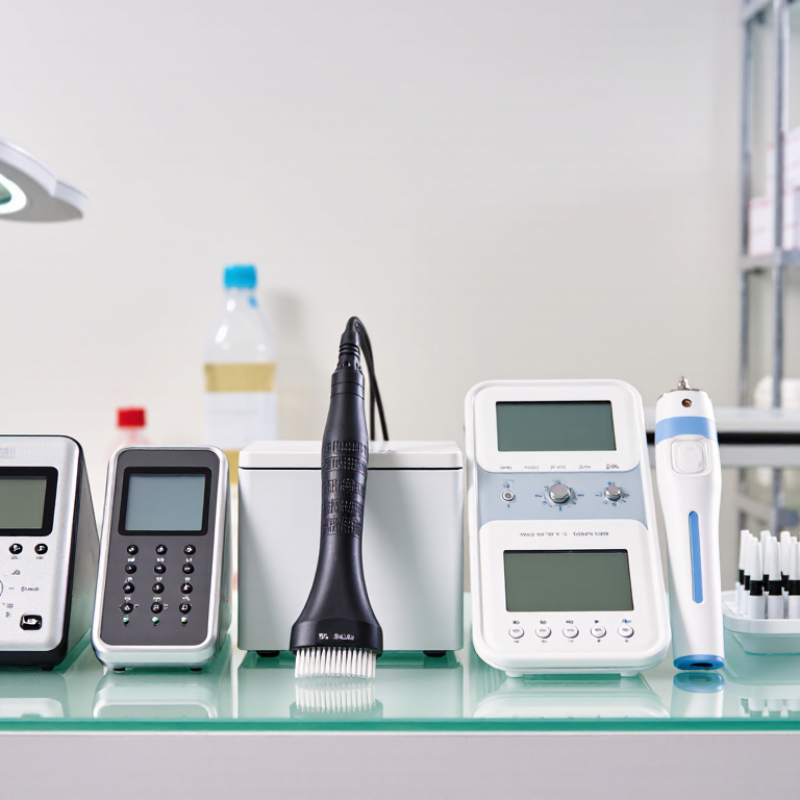
How Facial Microneedling Devices Work in Clinical Practice
A facial microneedling device uses fine needles to create controlled micro-injuries in the skin. This activates a local repair response and may support gradual changes in skin texture. Results vary with skin condition, treatment plan, and healing response. It is not an instant reset.
Clinical practice begins with assessment, not the device. A practitioner reviews skin history, current concerns, healing risks, and recent treatments before deciding whether microneedling is appropriate. Consent should cover likely redness, sensitivity, downtime, and less common complications. Small details matter. Skin is cleansed, and a sterile, single-use needle cartridge is fitted according to the device instructions. Treatment depth and technique are selected for the area and the individual, rather than applied uniformly across the face.
During treatment, the clinician watches the skin’s response and adjusts technique when needed. Pinpoint bleeding or redness can occur, but more pressure is not automatically better. This part is easy to underestimate. Aftercare is explained in plain language, including gentle cleansing and avoiding irritating products while the skin settles. The practitioner records the settings, areas treated, and immediate response, then checks healing at follow-up. A clear record helps refine care, especially when progress is slower than expected.
Types of Microneedling Devices Available to Clinics in 2026
Clinics in 2026 can choose manual stamps, motorized pen-style devices, and radiofrequency (RF) microneedling platforms. Manual tools allow careful placement over small areas. Motorized pens use replaceable needle cartridges and adjustable settings for consistent passes across the cheeks or forehead. RF systems deliver heat through needles, adding a thermal treatment component. Small details matter.
The ISAPS 2023 Global Survey recorded approximately 19.1 million nonsurgical aesthetic procedures worldwide. That figure reflects broad demand, not microneedling use specifically. Device choice should therefore rest on treatment goals, staff training, patient assessment, and the manufacturer’s clinical instructions—not market growth alone. Cartridge design, needle depth controls, cleaning protocols, and service support deserve close review.
RF and non-RF devices are not interchangeable. Their treatment mechanisms, risks, and evidence differ, and outcomes depend on patient factors and technique. The FDA has reported serious complications associated with certain RF microneedling uses, underscoring the need for qualified providers and careful patient selection. I would not treat a longer feature list as proof of better care. Evidence is still uneven, and clinics should document settings, consent, and follow-up clearly.
Key Criteria for Choosing a Clinic-Grade Microneedling Device
2026 Best Facial Microneedling Devices for Clinics?
A clinic-grade microneedling device should be judged by control, safety, and serviceability, not a long feature list. Start with adjustable needle depth and stable speed settings. These help practitioners adapt treatment to the area and the patient’s skin assessment. A clear display and responsive controls matter when switching between the cheeks, forehead, and smaller facial zones.
Check how the handpiece feels after several minutes of use. A heavy or vibrating grip can make precise work tiring. Cartridge fit should be secure, with sterile, single-use components and clear lot identification. Ask how the device is cleaned, maintained, and serviced. Consistent performance matters. A low price means little if replacement parts are difficult to obtain.
Look for credible documentation, practical staff training, and support for recording settings and cartridge details. These records can help a clinic review its procedures and address patient questions. No device makes every treatment predictable. Skin response varies, and appropriate patient selection remains essential. I would be cautious about claims of dramatic results or near-zero downtime; those promises deserve careful scrutiny. A useful choice is one the team can operate consistently, maintain properly, and explain honestly to patients.
Top Facial Microneedling Devices for Clinics in 2026: A Comparison
Choosing a facial microneedling device for a clinic means comparing workflow, control, and upkeep—not just speed. Pen-style systems are compact and easy to move between treatment rooms. Larger console units may offer clearer settings and more visible controls. Neither format suits every team. Small details matter.
Compare adjustable needle depth, stable speed under pressure, cartridge security, and handpiece weight. A balanced pen can reduce hand fatigue during longer sessions. A clear display helps staff confirm settings before treatment. Ask how single-use cartridges are tracked and disposed of, and what cleaning the device body requires. Check training, service access, and replacement-part availability before purchase.
A feature list cannot show how a device feels in a gloved hand. Request a supervised demonstration using the clinic’s usual setup, and assess noise, vibration, and setup time. Not every feature helps. No comparison is perfect: performance claims may use different testing methods, so ask for supporting documentation. Device selection should also fit clinician training, patient assessment, infection-control procedures, and the manufacturer’s instructions. A practical choice may be less impressive on paper, but easier to use consistently.
Clinical Safety, Treatment Protocols, and Device Maintenance
2026 Best Facial Microneedling Devices for Clinics?
Clinical Safety, Treatment Protocols, and Device Maintenance
Safe microneedling starts before the handpiece touches skin. Screen for active infection, impaired healing, and a history of abnormal scarring; postpone treatment when risks are unclear. Document skin condition, needle depth, passes, and the patient’s response. Protocols should reflect the treatment area and clinical assessment, not a fixed setting for every face. Small details matter.
The FDA warns that microneedling devices are not cleared to deliver cosmetics, topical medicines, vitamins, or blood products into the skin. Its safety guidance also identifies infection, pigment changes, and scarring as potential risks. A 2024 CDC MMWR investigation documented a cluster of five HIV infections associated with unsafe cosmetic services at a New Mexico spa, underscoring the need for rigorous infection control. Use a sterile, single-use needle cartridge for each patient, and never reprocess one.
Between appointments, follow the device’s instructions for cleaning and disinfection; keep liquids away from electrical components unless the instructions permit contact. Check cables, handpiece movement, and cartridge fit before treatment. Record cleaning, faults, and servicing dates. A maintenance log can feel tedious, but it helps reveal repeated problems. It is not a substitute for inspection. If performance changes, stop using the device and arrange qualified servicing rather than improvising a repair.
2026 Best Facial Microneedling Devices for Clinics? - Clinical Safety, Treatment Protocols, and Device Maintenance
Selection note: There is no single best device for every clinic. Choose a device based on its intended use, practitioner training, local regulatory requirements, treatment goals, service support, and the manufacturer’s current instructions for use (IFU). Specifications and permitted indications vary by device.
| Device category | How it works and control considerations | Potential clinical role | Safety and protocol considerations | Maintenance and consumables | Clinic selection notes |
|---|---|---|---|---|---|
| Motorized, non-RF microneedling pen | A motor moves a disposable needle cartridge in and out of the skin. Depending on the model, the operator may be able to adjust needle depth and operating speed. | May be considered by trained practitioners for selected skin-texture concerns and atrophic acne-scar treatment when appropriate to the device’s authorized indications and the patient’s assessment. | Depth, technique, treatment area, and session plan must follow the device IFU and clinical judgment. Assess skin condition and medical history; use aseptic technique and avoid treating compromised or infected skin. | Use a new, sterile, single-use cartridge for each patient and session as directed. Clean and disinfect the reusable handpiece and surfaces according to the IFU. Inspect cables, connections, and handpiece before use. | Review cartridge availability, traceability, operator training, service access, and whether the device’s intended use matches the clinic’s planned treatments. |
| RF microneedling system | Needles deliver radiofrequency energy into tissue. Energy delivery adds thermal effects, so it is not equivalent to non-RF microneedling. | May be used for selected indications only when supported by the device’s labeling, practitioner qualifications, and patient-specific assessment. | Requires training specific to the system and careful adherence to its settings and contraindications. RF microneedling can cause serious complications, including burns, scarring, unwanted tissue changes, or nerve injury. Discuss risks and alternatives during informed consent. | Use only compatible, sterile, single-use treatment tips or cartridges where specified. Follow the IFU for cleaning, inspection, software updates, and scheduled servicing. Do not reuse disposable components. | Verify local authorization and indications, training requirements, safety features, service support, and the availability of compatible consumables before purchase. |
| Manual microneedling stamp | A handheld device applies needles by direct pressure. Depth and consistency depend substantially on the device design and operator technique. | May be suitable for limited, clinician-selected applications where the device is intended for professional use and the operator is appropriately trained. | Use only within the device labeling. Avoid uncontrolled pressure or repeated passes that may increase skin injury. Maintain aseptic technique and use an appropriate sterile, single-use component when required by the IFU. | Follow the IFU for cleaning and disinfection of reusable parts. Discard single-use components after treatment; do not attempt to sterilize components not intended for reuse. | Check whether the device provides adequate control, clear instructions, and a documented cleaning and disposal process for the clinic. |
| Manual microneedling roller | A rotating roller carries needles across the skin. The angle of entry and treatment consistency can vary with movement and pressure. | Assess cautiously for professional facial use; it may offer less control over needle entry and treatment pattern than some other device designs. | Do not assume a consumer roller is suitable for clinical treatment. Use only a device intended for the proposed setting and follow its labeling. Stop if unexpected pain, bleeding, or an adverse skin response occurs. | Follow the IFU for cleaning and disposal. Never share a device or reuse a component labeled single-use. Maintain records of product lot numbers when applicable. | Compare control, intended-use labeling, cleaning requirements, and infection-control practicality with other options before selecting this category. |
| Across all device categories | Needle depth, needle configuration, energy delivery, and approved uses are device-specific; values should not be transferred from one model to another. | Patient selection should reflect the treatment goal, skin condition, medical history, and available evidence for the proposed use. | Screen for active skin infection or inflammation and other contraindications in the IFU. Consider history of abnormal scarring, impaired healing, bleeding risk, and medications or conditions that may affect healing. Provide pre- and post-treatment instructions and a plan for adverse events. | Maintain device, cleaning, service, training, and treatment records. Follow the manufacturer’s schedule for inspection, calibration, and servicing; do not substitute an unapproved cleaning agent or accessory. | Regulatory clearance or authorization is jurisdiction- and indication-specific. Verify current status with the relevant regulator and consult qualified clinical and legal advisers as needed. |
| Stage | Clinical or operational checkpoint | Documentation or action |
|---|---|---|
| Before treatment | Confirm practitioner competence, patient suitability, informed consent, treatment-area condition, and the device’s intended use. Check the handpiece and accessories for damage and confirm the correct sterile component is available. | Record assessment, consent, device and accessory identification where applicable, and the planned treatment parameters in accordance with the IFU. |
| During treatment | Use aseptic technique and follow the device-specific protocol. Monitor patient comfort and skin response. Do not apply topical products or substances through the skin unless their use is specifically supported by applicable labeling and clinical guidance. | Document the treatment area, device-specific settings, number of passes or treatment pattern where relevant, and any unexpected response. |
| Immediately after treatment | Provide aftercare instructions consistent with the device IFU and the patient’s clinical needs. Explain expected short-term effects and when to contact the clinic for concerning symptoms. | Record post-treatment observations, advice provided, and any follow-up plan or adverse event. |
| After each patient | Discard single-use needles, tips, cartridges, and other designated consumables safely. Clean and disinfect reusable parts and contact surfaces using the method and products specified by the manufacturer. | Complete the clinic’s cleaning and waste-disposal log. Never reuse a component labeled for single use. |
| Routine maintenance | Inspect the device, accessories, cables, and connectors at the intervals specified by the manufacturer. Arrange calibration, software updates, and preventive service only as directed by the IFU. | Keep maintenance, repair, calibration, training, and service records. Remove damaged or malfunctioning equipment from service until evaluated. |
Clinical reminder: Microneedling can cause infection, pigment changes, prolonged redness, scarring, or other complications. RF microneedling has additional energy-related risks. This comparison is general information, not a treatment prescription; device labeling, local regulations, and qualified clinical judgment take precedence.